Australian manufacturers face a convergence of pressures that spreadsheets and disconnected software simply cannot resolve: volatile input costs, stretched supply chains, tighter compliance requirements, and a labour market that refuses to get easier. Odoo manufacturing offers a unified answer. This guide walks through every layer of Odoo's manufacturing stack - from bills of materials and material requirements planning through to shop floor execution, quality, costing, and real-time reporting - with a deliberate focus on how it applies to Australian SMEs. We'll also cover how WAO, Australia's only accounting-led Odoo partner, configures these tools so that production data flows cleanly into your financials from day one.
Key Takeaways
- Odoo Manufacturing is a comprehensive production management application that centralises planning, shop floor control, quality, maintenance, and costing so Australian manufacturers can efficiently manage end-to-end production in a single system.
- The odoo manufacturing module (MRP) includes core tools like bills of materials, manufacturing orders, work orders, routings, material requirements planning, and the real-time shop floor app - all integrated with inventory, purchasing, sales, and accounting modules.
- WAO, as Australia's only accounting-led Odoo partner, specialises in tailoring Odoo Manufacturing for local SMEs in discrete, food & beverage, and industrial sectors, ensuring costing accuracy, BAS/GST compliance, and financial reporting integrity.
- Local hosting options, compliance-aware configurations (traceability, quality control points, landed costing), and integration with Australian logistics and accounting ecosystems make Odoo the right move for local manufacturers seeking growth without the price tag of legacy ERPs.
- This article covers key features, real-world Australian scenarios, and clear next steps for engaging WAO to implement or improve Odoo in your manufacturing business.
What Is Odoo Manufacturing (Odoo MRP)?
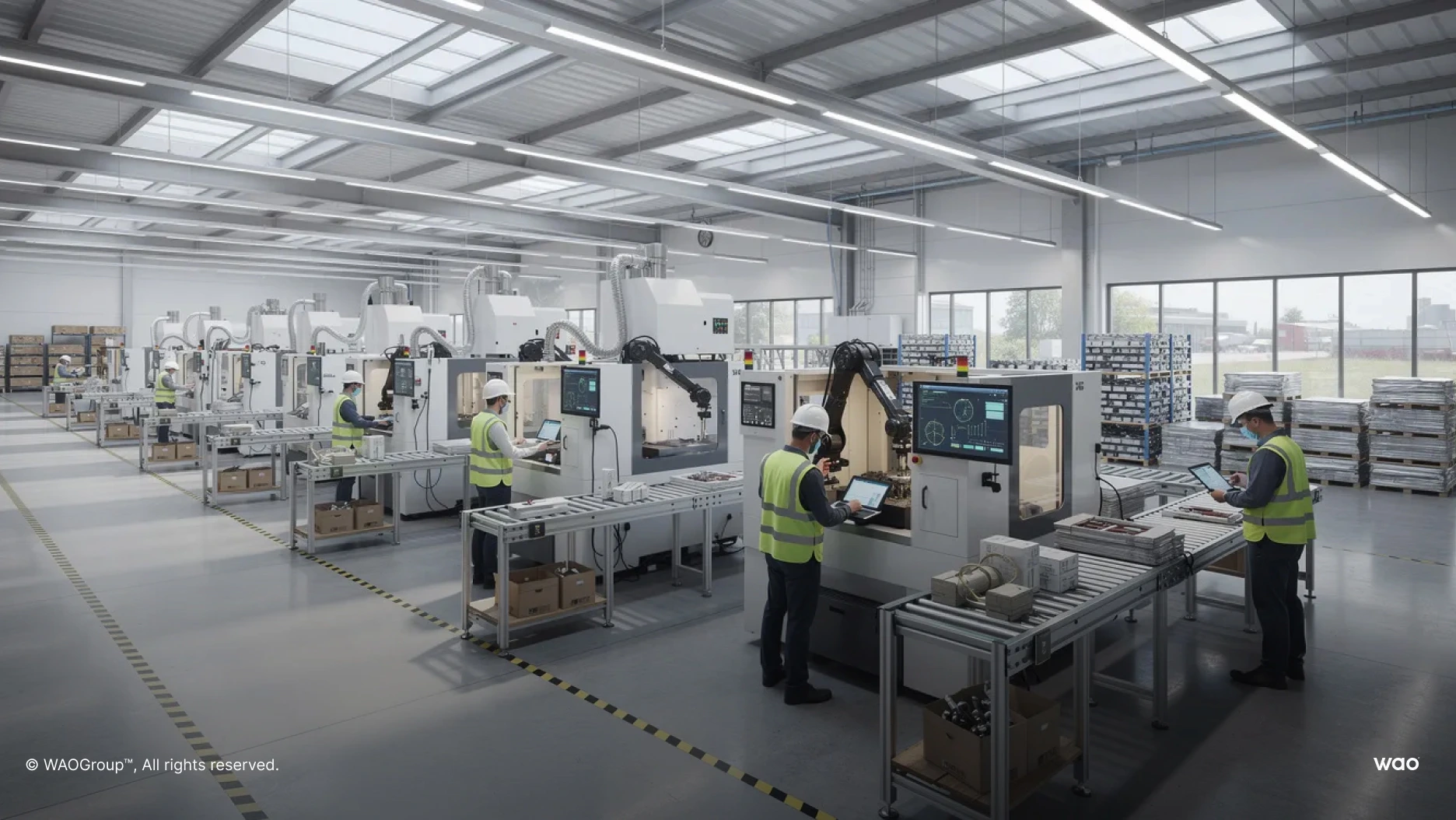
Odoo Manufacturing is the module within the Odoo ERP suite that runs the entire manufacturing process from demand signal through to finished products landing in your warehouse. It integrates all manufacturing processes into one system - no separate databases, no CSV exports between tools, no reconciliation headaches at month-end.
At its core, the odoo manufacturing module ties together manufacturing orders, work orders, bills of materials, routings, and inventory movements. A sales order creates demand. The MRP engine determines what needs to be produced and when. Components are reserved from inventory. Work orders flow to the shop floor. Finished goods are received back into stock. Odoo Manufacturing integrates MRP, PLM, and Quality modules into a cohesive production ecosystem.
The system suits the manufacturing types most common across Australia and New Zealand: discrete manufacturing (metal fabrication, machinery, joinery, packaging equipment), food & beverage production, and light process manufacturing. Whether you're running a CNC shop in Western Sydney or a beverage line in Adelaide, the same underlying architecture applies.
A few terms worth clarifying for anyone new to manufacturing ERP:
- Manufacturing order (MO): The central record for a production job - what you're making, how many, and from which components.
- Work order: An individual operation within an MO (e.g. cutting, welding, assembly), assigned to a specific work center.
- Routing: The sequence of operations that defines how a product moves through your factory.
- Work center: A physical resource - a machine, a workbench, a team - with defined capacity, cost rates, and availability.
Odoo Manufacturing sits within a broader stack that includes Inventory, Purchase, Sales, Accounting, Quality, Maintenance, and product lifecycle management. These companion manufacturing modules are what transform Odoo from a basic MRP tool into a complete production management platform.
Why Australian Manufacturers Are Moving to Odoo
The pressure on Australian manufacturers is structural, not cyclical. Skills shortages constrain capacity. Import-heavy supply chains mean lead times measured in weeks, not days. Rising energy and materials costs compress margins that were already thin. These pressures demand visibility and control that spreadsheets cannot provide.
Many local SMEs are graduating from basic accounting packages or cobbled-together systems - a combination of MYOB for invoicing, Excel for production scheduling, and whiteboards for shop floor tracking. The result is manual work, duplicated data entry, and decisions made on gut feeling rather than real-time data. Odoo Manufacturing can automate workflows and offer real-time visibility across every manufacturing operation, eliminating the information lag that kills margins.
Odoo reduces total cost of ownership compared to traditional ERPs. Its modular architecture means you don't pay for functionality you don't need yet. Odoo allows companies to scale by adding modules as needed - start with MRP, Inventory, and Accounting, then layer on Quality, PLM, and Maintenance as the business grows. This makes it accessible for Australian SMEs that need enterprise-grade capability at a lower cost than legacy platforms. Odoo enhances operational efficiency for small and mid-sized manufacturers without demanding a six-figure implementation budget upfront.
Deployment flexibility matters here too. Odoo can run in the cloud or on locally hosted infrastructure, addressing data residency and latency concerns for manufacturers running mission-critical shop floor systems. Multi-warehouse operations across Sydney, Melbourne, Brisbane, and Perth are handled natively, with strong landed cost and MRP capabilities for import-heavy supply chains.
WAO positions Odoo as a future-ready platform that grows with the business, providing local implementation, training, and ongoing support so teams actually adopt the system rather than fight it.
Core Building Blocks: Products, BoMs, and Routings
Clean master data is the foundation of any manufacturing ERP. Get your products, bills of materials, and routings wrong, and every downstream process - planning, costing, shop floor execution - inherits that error.
Odoo requires you to define products with clear categorisation:
- Stockable items: Raw materials, components, and finished products that carry inventory valuation.
- Consumables: Items used in production but not tracked at the unit level (e.g. cleaning solvents, disposable tooling).
- Routing: The sequence of operations that defines how a product moves through your factory.
- Services: Labour, subcontracting, or external processing costs that feed into product costing without occupying warehouse space.
Misclassifying a stockable item as a consumable distorts your inventory valuation and financial statements. This is a common implementation pitfall that WAO specifically audits during setup.
Odoo uses bills of materials to structure multi-level component lists. A BoM defines the components, quantities, and work orders required to produce a finished product - all in a single system. Multi-level BoMs support sub-assemblies: a door frame manufacturer, for example, can nest the BoM for a hinge assembly inside the BoM for the complete door unit. Odoo allows businesses to manipulate and manage complex bills of materials seamlessly, with version control and effective dates so that engineering changes apply only to future orders. A precision plastics manufacturer in Brisbane eliminated BoM version confusion entirely once engineering BoMs were under version control in Odoo - only one effective version visible for new orders.
Routings and work centres represent the physical manufacturing process. Each work center carries capacity, cost rates (labour and machine), setup times, and availability calendars. Routings define how work flows - cutting → bending → welding → powder coating → packing - capturing the time and resources consumed at each step.
WAO typically helps clients structure BoMs and routings during on-site implementation workshops, matching the system configuration to real shop floor constraints and Australian wage and machine cost structures.
From Demand to Production: Material Requirements Planning (MRP)
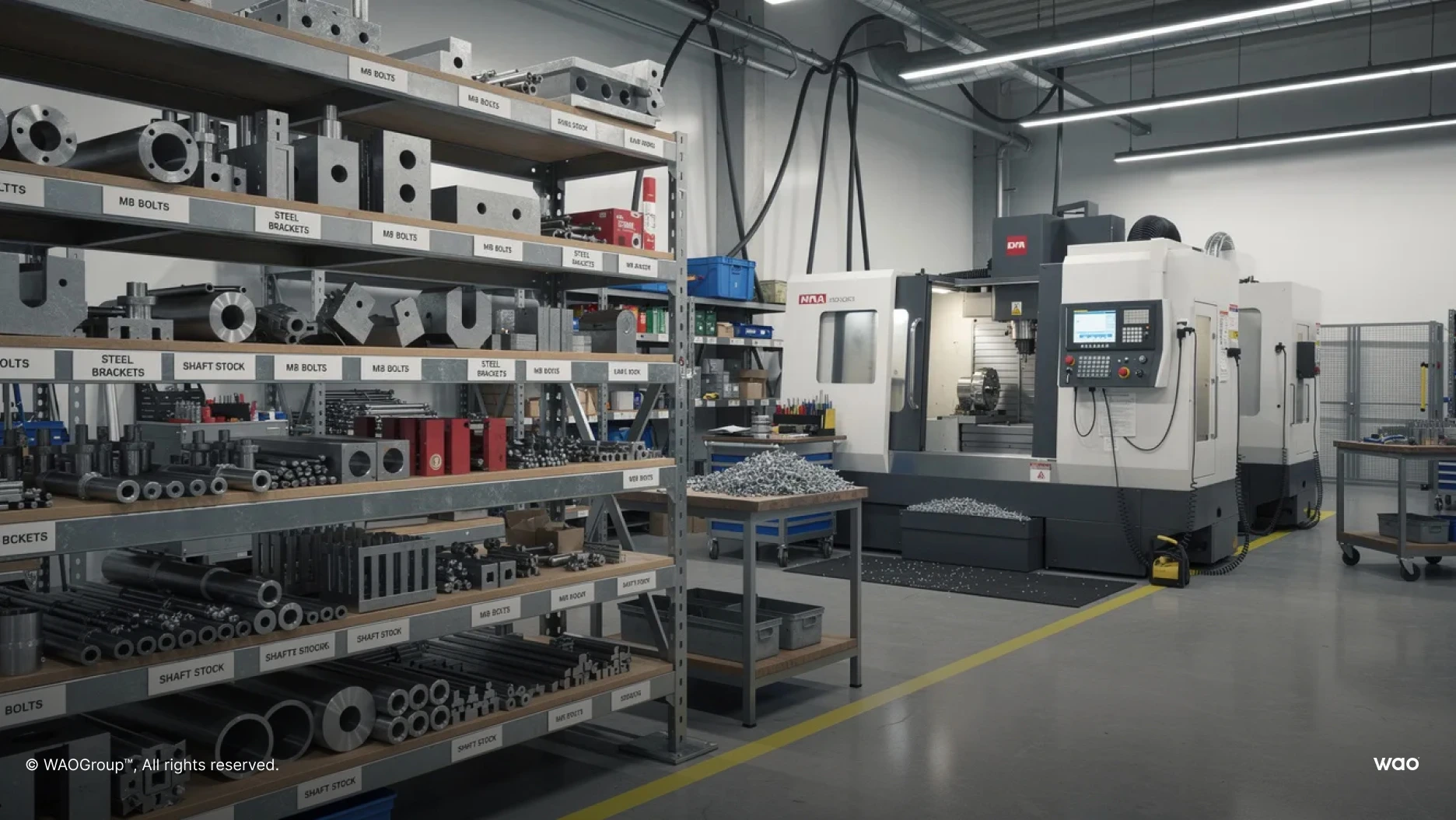
The manufacturing process flow in Odoo begins with demand - either from sales orders or forecasts - and ends with planned manufacturing orders ready for execution. Material requirements planning is the engine that connects the two.
Odoo's MRP module generates orders based on demand and stock levels. It calculates what to make and when, factoring in current inventory, open purchase orders, supplier lead times, safety stock policies, and BoM structures. Odoo MRP automatically generates manufacturing orders based on demand, removing the guesswork from production planning.
For Australian manufacturers, seasonality is a critical planning variable. Food and beverage producers face demand spikes around Christmas, Easter, and harvest periods. The Master Production Schedule in Odoo aligns production quantities with actual sales goals, allowing planners to model these seasonal patterns and pre-build stock accordingly. Odoo includes tools for planning and scheduling production based on demand forecasts, giving production teams forward visibility rather than reactive scrambling.
The MRP engine also drives purchasing. Odoo can automatically generate purchase requests for missing raw materials based on inventory levels. When MRP suggests a manufacturing order but components are short, purchase requisitions flow to the procurement team without manual intervention. For Australian manufacturers relying on imported raw materials with long shipping times and customs delays, configuring realistic lead times and stock rules is essential.
Odoo's MRP module optimizes resource allocation and reduces waste by ensuring you produce only what's needed, when it's needed. WAO configures reorder rules, safety stock parameters, and planning horizons to match local supplier behaviour and freight timelines - because a reorder rule based on European lead times will cause stockouts in Australia.
Managing Manufacturing Orders Efficiently
A manufacturing order in Odoo is the central record for a production job, batch, or run. It captures what you're making, the quantity, the BoM used, the components consumed, the time taken, and the operators involved. Manufacturing Orders trigger production processes based on customer demand - whether that demand comes from a sales order, a forecast, or a manual planning decision.
The typical workflow runs as follows:
- MO creation: Triggered manually, from a sales order (make-to-order), or via MRP (make-to-stock).
- BoM explosion: Components and operations are populated from the BoM.
- Reservation: Raw materials are reserved from inventory.
- Scheduling: Work orders are assigned to work centres based on routing and capacity.
- Execution: Operators complete work orders, recording time, quantities, and scrap.
- Completion: Finished products are received into inventory.
Odoo supports one-step, two-step, and three-step manufacturing processes. A simple workshop might use one-step (components picked, product manufactured, finished goods stored in a single flow). A more complex operation might separate picking, manufacturing, and finished goods receipt into distinct steps with quality holds between them.
Odoo automates production workflows to enhance efficiency. MOs track quantities planned versus produced, scrap recorded, time taken, and the responsible operator - data that feeds directly into costing and continuous improvement initiatives. In WAO projects, MO screens are often simplified for operators to reduce cognitive load, while supervisors get richer views with KPIs, exception alerts, and variance reporting.
Shop Floor Control and Tablet-Based Work Orders
Many Australian factories still run on paper travellers - printed job sheets that move with the product through production stages, accumulating handwritten notes, tally marks, and coffee stains. Odoo's shop floor app replaces this with live digital work instructions accessible on tablets or touchscreens at each workstation.
The shop floor module records orders and times via tablets, giving operators a clear view of today's jobs, quantities, and step-by-step instructions directly on the line. Odoo's Shop Floor app provides real-time work order data to both operators and supervisors. Workers can start and stop timers, record actual production quantities, note downtime reasons, and log scrap - all without leaving the workstation. Odoo allows for paperless operations through its Shop Floor app, eliminating end-of-shift paperwork and the data entry lag that comes with it.
A Victorian food processor eliminated manual end-of-shift production reports within six weeks of going live with Odoo, because shop floor visibility was instant. Daily planning meetings dropped from 45 minutes to roughly 10 minutes, since WIP status was available in real time rather than reconstructed from paper records.
Odoo allows integration with IoT devices for enhanced operations. Using an iot box, manufacturers can connect scales, barcode printers, label printers, and sensors directly to the shop floor app. This iot integration extends visibility from software into the physical production environment.
For factories with patchy WiFi - a common reality on Australian shop floors - the system needs careful network design. WAO helps plan tablet placement, network infrastructure, and barcode scanning workflows to cope with connectivity constraints while meeting Australian health and safety expectations.
Product Lifecycle Management (PLM) and Engineering Change Control
Product lifecycle management in Odoo serves as the hub for engineering documents, version control, and engineering change orders (ECOs). When a client changes specifications, a regulator updates labelling requirements, or your engineering team finds a better way to build something, PLM provides the controlled process for making those engineering changes.
ECOs in Odoo create formal workflows to update BoMs, routings, and product documentation. Changes can be reviewed and approved by engineering, production, and finance before they take effect - ensuring that no one on the shop floor builds to an outdated specification.
CAD drawings, PDFs, technical data sheets, and assembly instructions can be attached directly to products and BoMs, accessible from the shop floor during production. This is particularly relevant for Australian manufacturers dealing with frequent formulation adjustments for allergen labelling compliance, or modifying fabricated components to meet updated Australian standards.
WAO often integrates PLM with existing design workflows, setting up approval chains that involve the right stakeholders and ensuring that version-controlled documentation replaces the informal "latest file on the shared drive" approach that creates risk in regulated environments.
Quality Management and Traceability
Australian standards and retailer expectations are driving higher quality and traceability demands across every manufacturing sector. Major retailers require full traceability. Food safety regulations demand documented quality control at every stage. Odoo's quality module meets these requirements within the same system that runs production.
Odoo defines Quality Control Points (QCPs) at receiving, in-process stages, and final inspection. Each control point can require pass/fail checks, measurement recording, or photo evidence. Quality checks are linked directly to manufacturing orders, batches, and operators - creating an audit trail that connects every quality decision to the production data that generated it. Odoo provides real-time statistical analysis of quality issues, enabling production managers to spot trends before they become systemic problems.
Workers can send feedback on quality issues through the app, raising nonconformance records directly from the shop floor. These trigger corrective and preventive action workflows, linked to specific MOs, suppliers, or customers. Odoo integrates quality management with other manufacturing processes, so a quality issue on the line immediately flags the affected batch, the raw material lot, and the supplier who provided it.
Full traceability means lot tracking and serial numbers flow upstream and downstream. An Adelaide beverage manufacturer reduced the time to trace a quality issue back to a specific supplier lot from approximately three days to eight minutes. Odoo's quality module helps reduce defects and rework by making quality control visible, measurable, and accountable.
WAO configures quality plans based on each client's compliance obligations - whether that's HACCP for food safety, ISO-style quality systems, or retailer-specific audit requirements.
Equipment Maintenance and Uptime Management
Odoo's Maintenance module reduces equipment downtime significantly by bringing preventive and corrective maintenance into the same system that manages production. When your maintenance schedule lives in a separate spreadsheet from your production schedule, conflicts are inevitable.
Preventive maintenance schedules are configured from manufacturer guidelines or local experience, generating automatic work orders for fitters or technicians at defined intervals. Operators can trigger corrective maintenance directly from a work order tablet when they notice issues - unusual noise, vibration, or quality drift - without leaving the production interface.
For Australian plants with limited maintenance teams, this provides a prioritised maintenance backlog, planned downtime windows that align with production schedules, and fewer surprise stoppages. WAO supports clients in setting realistic preventive intervals and building downtime cause reports that inform capital expenditure decisions - replacing reactive spending with data-driven investment.
Inventory, Warehousing, and the Manufacturing Process
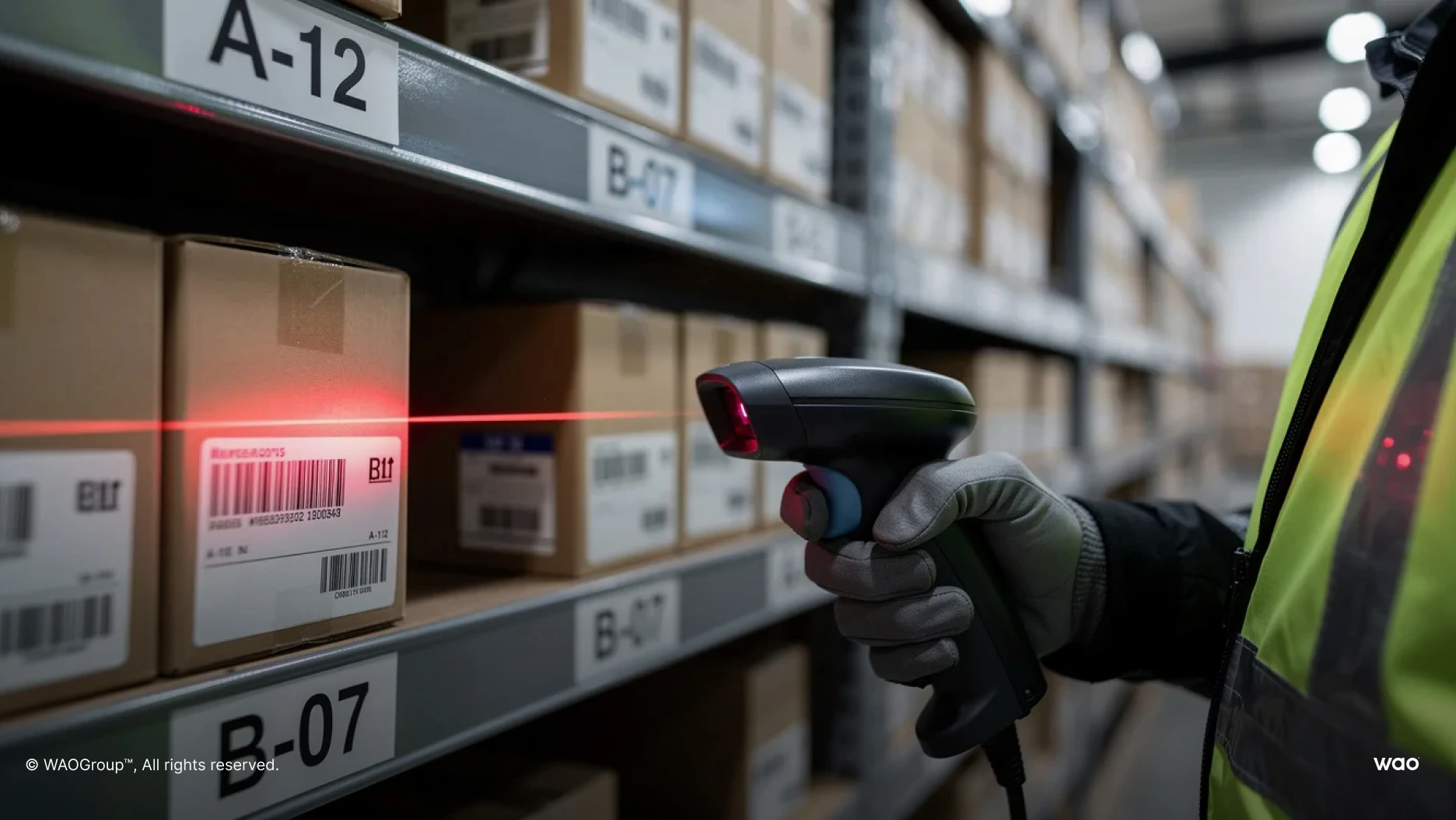
Odoo integrates inventory management with production planning seamlessly, ensuring stock levels are always current. Every component pick, scrap event, and finished goods receipt updates inventory in real time. Odoo provides real-time inventory data for better decision-making - no more walking the warehouse to count stock before committing to a customer promise.
Component picking flows support picking lists, barcode scanning, and stock reservations from raw material warehouses to production locations. Finished products are received back into storage with options for quality holds, quarantine locations, and cross-docking for urgent customer orders.
Australian-specific scenarios include:
- Multi-site operations across states, with transfer orders between Sydney manufacturing and Melbourne distribution.
- Consignment stock held at major customer sites, tracked within Odoo's inventory system.
- Local versus imported raw materials, with different lead times, landed costs, and reorder rules.
WAO designs warehouse configurations - locations, routes, pick paths - and scanning workflows to minimise travel time and errors. The goal is an inventory system that operators trust, because trusted data drives better decisions.
Costing, Margins, and Accounting-Led Manufacturing
This is where WAO's positioning as Australia's only accounting-led Odoo partner creates material value. Getting costing right is not a nice-to-have for Australian SMEs facing thin margins and volatile input prices - it's existential.
Odoo tracks production costs by factoring in raw materials and labor automatically. Every component consumed, every minute of operator time, and every machine hour feeds into the manufacturing order cost. Standard cost, FIFO, and average cost valuation methods are supported, each with different implications for financial statements and pricing decisions. Cost allocation across work centres ensures overheads are distributed accurately rather than estimated.
Variance analysis surfaces the gap between planned and actual performance:
Variance Type | What It Measures | Who Uses It |
Material usage variance | Difference between planned and actual component consumption | Production managers |
Labour efficiency variance | Planned vs actual time per operation | Supervisors, HR |
Overhead variance | Budgeted vs applied overhead per work center | Finance team |
Scrap variance | Value of materials scrapped vs expected yield | Continuous improvement |
An Australian packaging manufacturer used these variance reports to identify loss-making product lines that had been cross-subsidised by profitable ones for years - a discovery that reshaped their pricing strategy.
WAO's finance specialists align Odoo's costing setup with Australian accounting standards and management reporting needs, ensuring that BAS, GST, and ATO compliance are built into the manufacturing cost flow rather than bolted on after the fact.
Planning and Scheduling on the Shop Floor
Effective production planning requires balancing limited machines and crews against customer commitments - a challenge amplified in Australia where overtime rates and casual labour costs are among the highest in the developed world.
Odoo provides Gantt chart views for work orders, finite capacity planning by work center, and drag-and-drop rescheduling. Planners can see bottlenecks forming, move jobs between shifts or work centres, and assess the impact on time delivery commitments before making changes. Linking production plans to sales forecasts and framework orders means the production schedule anticipates demand rather than reacting to it.
In Australian use cases, lead times have been reduced by approximately 25% through clearer routings and inline quality checks, according to published implementation data. Emergency purchases have dropped by up to 40% when reorder rules and MRP parameters are correctly configured.
WAO tunes scheduling rules, shift calendars (including public holidays and award-compliant shift patterns), and priority logic to reflect local working arrangements. The result is a plan that operators and supervisors trust, because it accounts for the constraints they actually face.
Job Visibility, KPIs, and Real-Time Reporting
Once production data flows through Odoo rather than sitting in disconnected spreadsheets, reporting transforms from a painful reconstruction exercise into a live management tool. Odoo integrates all production data in one platform and provides real-time data for better decision-making across every level of the organisation.
Live dashboards for production managers typically include:
On-time delivery performance against customer commitments.
WIP value and volume by work center.
Scrap rates by product line and shift.
Machine utilisation and bottleneck analysis.
Shop floor visibility extends to sales and customer service teams, who can see order status and provide realistic promised dates without chasing the production manager. The integration within Odoo's ERP ecosystem prevents the need for manual data entry across applications - a single source of truth from quote to delivery.
Standard reports can be exported or scheduled for leadership and board reporting. WAO typically builds custom dashboards for each role, focusing on four or five KPIs that matter most to that specific business rather than overwhelming users with data they won't act on.
Specific Scenarios: Discrete, F&B, and Industrial Manufacturing
Odoo's flexibility supports different manufacturing processes common in Australia, but the configuration differs materially by sector.
Discrete manufacturing: (metalwork, machinery, joinery):
Multi-level BoMs with sub-assemblies and configurable variants.
Engineering change control via PLM for version-managed components.
Serial numbers for full traceability of serialised finished products.
Make-to-order workflows triggered directly from sales orders.
Food & beverage:
Recipe-based BoMs with yield and scrap percentage calculations.
Batch and lot tracking with expiry date management.
Allergen and nutritional information attached to product records.
Strict quality control points at receiving, in-process, and dispatch.
Full traceability from supplier lot to end customer.
Industrial and building products:
Large batch production with make-to-order and make-to-stock variants.
Project-linked manufacturing orders for construction and infrastructure contracts.
Heavy freight logistics coordination across Australian states.
Cost-plus and fixed-price contract costing models.
WAO brings playbooks and templates from past Australian implementations in these sectors, shortening the design and testing phases. The underlying Odoo manufacturing processes and modules are proven - the differentiation comes in how they're configured for your specific operations.
Integration with Sales, Purchasing, and eCommerce
True efficiency comes when manufacturing isn't run as a silo but integrated with every other function in the business. Odoo Manufacturing integrates with inventory, purchasing, sales, and accounting modules natively - no middleware, no overnight sync jobs, no "system said one thing, warehouse said another" conversations.
Sales orders can automatically trigger manufacturing orders or pull from stock, with accurate available-to-promise dates calculated from current WIP, inventory, and planned production. The Purchase module works with MRP to generate purchase orders for raw materials, packaging, and subcontracting when demand exceeds available stock.
For Australian manufacturers selling direct-to-consumer or to small trade customers, integration with eCommerce and customer portals means online orders flow into the same planning engine as wholesale orders. WAO frequently integrates Odoo with local freight providers, 3PLs, and external sales channels so the system has full visibility of demand and supply - not just the orders entered manually.
Odoo offers a free plan for one module with unlimited users, making it possible to trial the system before committing to a full manufacturing deployment.
Cloud, Hosting, and Data Residency for Australian Manufacturers
Data location, performance, and reliability matter acutely for manufacturers running mission-critical shop floor systems. A three-second page load on a tablet at the welding station isn't a minor UX issue - it's a productivity killer.
Odoo supports multiple hosting models:
Model | Best For | Considerations |
Odoo Online | Simple deployments, smaller teams | Managed by Odoo, limited customisation |
Mid-complexity, development flexibility | Staging environments, GitHub integration | |
Self-hosted (AU data centre) | Data residency, low latency, full control | Requires infrastructure management |
Backup, disaster recovery, and uptime expectations must be explicit for factories that cannot afford extended downtime. Role-based access separates shop floor operators from management and finance users, with audit trails supporting separation of duties in regulated sectors.
WAO advises on the right hosting model for each client, balancing cost, control, and compliance requirements against the practical realities of Australian network infrastructure.
Implementing Odoo Manufacturing with WAO
WAO's implementation approach for manufacturing follows a structured methodology: discovery, design, configuration, testing, training, and go-live support. Each phase is designed to reduce risk and ensure the system matches real operational needs rather than theoretical best practice.
The process begins with on-site or remote workshops where WAO maps existing manufacturing processes and pain points. These workshops surface the disconnects - where data is re-keyed, where decisions are made on outdated information, where costs are estimated rather than measured.
A phased roadmap typically looks like this:
Phase 1: Core MRP, Inventory, and Accounting - the financial backbone.
Phase 2: Shop floor tablets, barcode scanning, work order execution.
Phase 3: Quality, PLM, Maintenance - layered on once the core is stable.
Change management deserves equal weight to technical configuration. Training operators, supervisors, and back-office staff to stay organized within the new system is what determines whether Odoo becomes part of daily routines or another system people work around. WAO delivers role-based training sessions and quick-reference guides tailored to each user group.
Ongoing optimisation and support services include upgrades to newer Odoo versions and adding features over time - ensuring the system evolves with the company rather than becoming the next old system to be replaced.
Real-World Examples from Australian Manufacturing
While specific client details are confidential where required, the patterns across Australian Odoo manufacturing implementations are consistent and instructive.
Discrete manufacturer - regional metal fabrication: A business operating from spreadsheets and a basic accounting package moved to Odoo and gained MRP-driven production planning, accurate lead times, and margin visibility per job. Supervisors could see live WIP status instead of walking the floor. The resources previously spent reconciling spreadsheets were redirected to customer service and quoting.
Food & beverage - beverage producer: Using Odoo for batch tracking, recipe management (BoM-based), and retailer compliance reporting. Quality checks at receiving and final inspection replaced paper-based QA logs. Traceability from supplier lot to finished goods batch - achievable in minutes rather than days. WAO's work on a comparable project, Divine Cosmetics' global manufacturing implementation, demonstrates the same pattern of replacing fragmented systems with unified production and quality management.
Industrial - prefabricated building components: Project-linked manufacturing orders, make-to-order workflows, and just-in-time delivery scheduling across multiple Australian states. Cost tracking per project replaced end-of-month estimates with mid-run actuals, enabling the company to manage margins on fixed-price contracts.
Implementation timelines vary, but one documented case saw a manufacturing business upgraded from Odoo 16 to 19 in six weeks for under $35,000 - a fraction of the 14-week, $85,000 quote from another provider.
How WAO Helps You Efficiently Manage the Entire Manufacturing Process
Odoo provides the platform. WAO provides the local expertise to implement it with financial precision.
Key areas where WAO adds value:
- Process design: Mapping your current manufacturing operations and designing Odoo configurations that improve them, not just replicate them.
- Accounting-aligned costing: Ensuring standard costs, valuation methods, and variance reporting align with Australian accounting standards and your management reporting needs.
- Integrations: Connecting Odoo with other systems - freight providers, 3PLs, external sales channels, banking - so the plan reflects reality.
- Data migration: Moving master data from your old system cleanly, with validation and testing before go-live.
- Tailored training: Role-based sessions for operators, supervisors, planners, and finance - not generic Odoo training, but training for your processes.
WAO operates across Australia and New Zealand with deep understanding of local tax, payroll, and compliance requirements that intersect with manufacturing operations. This isn't theoretical knowledge - it's the product of implementing Odoo across dozens of product-based businesses.
f your current system relies on manual work, disconnected spreadsheets, or gut feeling to manage production, the gap between where you are and where you could be is measurable. WAO can help you benchmark that gap and create a clear plan to close it.
Ready to move? Contact WAO for a manufacturing-focused scoping workshop, demo, or readiness assessment tailored to your specific business.
Frequently Asked Questions about Odoo Manufacturing for Australian Businesses
Below are answers to the most common questions Australian manufacturers ask when evaluating Odoo MRP and the broader manufacturing odoo ecosystem.
Odoo scales from small workshops with a handful of employees up to multi-site operations with hundreds of users. Many Australian SMEs start with core MRP, Inventory, and Accounting - the minimum viable manufacturing ERP - and expand as they grow. The modular architecture means you don't pay for Quality, PLM, or Maintenance until you need them. Core manufacturing functionality is available in Odoo Community edition, though companion modules like Shop Floor, Quality, and PLM require Enterprise licensing. Odoo offers a free plan for one module with unlimited users, which can be useful for initial evaluation.
A focused single-site SME project typically runs 8 to 10 weeks from discovery to go-live, while a multi-site or heavily customised manufacturing build usually takes 5 to 7 months. Key factors that influence duration include the number of products and BoMs to migrate, the complexity of routings and work centres, the number of integrations with other systems, and the degree of change management required. Multi-site deployments or heavily customised environments take longer. One documented Australian case completed a full version upgrade in six weeks for under $35,000. WAO provides detailed implementation timeline guidance based on your scope.
Yes. Odoo supports subcontracting workflows where you send components to an external processor, track materials in transit, receive processed goods back, and integrate subcontractor costs into the manufacturing order. This is relevant for Australian manufacturers who outsource specific operations - powder coating, heat treatment, specialised machining - while managing the overall production process in-house.
Tablet interfaces are deliberately simple. Operators see their assigned work orders, quantities, and instructions - not the full ERP. WAO delivers role-based training sessions lasting two to four hours per user group, supplemented by quick-reference guides and job aids positioned at workstations. The goal is to reduce reporting burden, not increase it. One Australian food processor eliminated end-of-shift manual reporting entirely within six weeks of go-live because operators were recording data in real time on the shop floor.
Even informal or partially documented processes can be improved during implementation. The key is honest discovery: understanding where delays occur, where data is re-entered, where decisions rely on outdated information, and where costs are estimated rather than measured. A short Readiness Assessment with WAO - typically a half-day workshop - can identify priorities, quick wins, and the right phasing for your implementation. You don't need perfect processes to start. You need a clear picture of where you are and a realistic plan for where you want to be.
Not Sure If Odoo is Right For Your Business?
We will tell you honestly whether Odoo is the right fit for your manufacturing operations, or whether you would be better served by a legacy manufacturing-specialist platform.
The information and tips shared on this blog are meant to be used as learning and personal development tools as you launch, run and grow your business. While a good place to start, these articles should not take the place of personalised advice from professionals. As our lawyers would say: “All content on WAO’s blog is intended for informational purposes only. It should not be considered legal or financial advice.” Additionally, WAO is the legal copyright holder of all materials on the blog, and others cannot re-use or publish it without our written consent.