Master Your Margins with an ERP Built for Your Supply Chain
Where Supply Chain Decisions Meet Financial Control.
In wholesale and distribution, success is measured in fractions of a percent. Thin margins, complex supply chains, and fluctuating inventory costs mean that a lack of financial control is not just an inconvenience—it's an existential threat. A generic ERP can track inventory, but it takes a finance-first approach to truly protect your profitability.
As a firm founded by accountants, we implement Odoo to provide a single source of truth from procurement to payment. We ensure that every operational decision is backed by accurate, real-time financial data, giving you the confidence to manage your cash flow, control costs, and scale your operations profitably.

From Warehouse Chaos to Financial Control
We configure Odoo to address the specific financial and operational challenges that wholesalers and distributors face every day:

Order-to-Cash Automation
Accelerate cash flow with fully automated sales processes. From quote to order, delivery, and invoicing, Odoo builds efficient workflows that reduce manual entry, minimize errors, and free your team to focus on growth.

Connected Supply Chain
We create a fully connected ecosystem by integrating Odoo with your key partners. This includes seamless connections to Third-Party Logistics (3PL) providers for outsourced warehousing and Electronic Data Interchange (EDI) for automated ordering with major retail partners.

Real-Time Inventory
Go beyond simple stock counts. With Odoo, you gain multi-warehouse management, real-time stock valuation, and advanced tracking with serial numbers and batches—giving you a precise, auditable view of your largest asset.

Accurate Landed Costs
Stop guessing your product profitability. We configure Odoo to capture and allocate all associated costs—freight, insurance, and duties—so you gain a true understanding of landed costs and can make smarter pricing decisions.
On this page
- What a distribution ERP has to do
- Inventory accuracy and valuation
- Purchasing and replenishment
- Landed costs on imports
- Warehouse operations and picking
- Margin by customer and SKU
- Food and beverage distribution
- Pricing and trading terms
- B2B portal and online ordering
- 3PL, EDI and integrations
- Where Odoo has limits
- Implementation, cost and timeline
The job to be done
What a distribution ERP actually has to do
A distributor does not make the product. The margin is made in the gap between what you buy for and what you sell for, and it is lost in four places: stock that does not move, freight and duty that never make it into the cost price, customers whose real cost to serve nobody has calculated, and orders that go out wrong. Software that only records transactions will not find any of those.
An ERP earns its place in a wholesale business when it can answer, without anyone exporting anything to a spreadsheet, what you can promise a customer today, what a line of stock actually cost to land, and which customers and SKUs are carrying the business rather than being carried by it.
Promise what you can deliver
On hand, forecast and free to sell are three different numbers. The sales team needs the third one, on the quote, before they commit.
Cost what you actually paid
Freight, duty, brokerage and insurance belong in the cost of the goods, not in an expense account at the bottom of the profit and loss.
Know where the margin is
Per customer, per SKU, per order — after rebates, freight and the cost of servicing the account.
Get the order out once
Pick, pack and dispatch with a document trail, so a short-supplied delivery is an exception you can see rather than a phone call you receive.
The rest of this page is how Odoo does each of those, and where it stops short. If you would rather talk it through against your own numbers, a 45-minute implementation fit call is the fastest way to find out whether this is a fit.
Inventory
Inventory accuracy and stock valuation
Most distributors we meet do not have an inventory problem so much as a reservation problem. The warehouse count is roughly right; what nobody can see is how much of it is already spoken for. Odoo tracks on hand, forecasted and free to sell as separate figures and surfaces them on the sales order line, so a rep quoting a customer is looking at what is genuinely available rather than what is physically present.
Costing that the balance sheet agrees with
Odoo supports standard price, average cost and FIFO, set per product category, with automated inventory valuation posting the journal entries as goods move. That last part is the one that matters to whoever signs the accounts: stock on hand and the stock figure on the balance sheet reconcile continuously, rather than being trued up once a year and argued about.
Getting the costing method right per category is a decision with tax and reporting consequences, not a configuration checkbox. It is one of the things we work through in the blueprint rather than during the build.
Cycle counts instead of shutting the warehouse
A full stocktake across a large catalogue is disruptive enough that most businesses do it as rarely as they can get away with, which is exactly why the numbers drift. Odoo schedules counts by product category and by location on a rolling frequency, so high-value and fast-moving lines are counted often and the slow tail is counted occasionally. Accuracy improves and the warehouse does not stop.
Multiple warehouses, locations and negative stock
Locations nest as deeply as your warehouse actually works — zone, aisle, bay, bin — and each can carry its own putaway and removal rules. Odoo will allow negative stock if you let it, which is occasionally useful and usually a symptom. We generally turn it off, because a negative on-hand figure is a receipt someone has not processed and you want to find it now rather than at year end.
Buying
Purchasing, replenishment and dead stock
Two failures cost a distributor money in opposite directions. Running out of a line that a customer orders every week loses the sale and sometimes the customer. Buying a pallet of something that then sits for two years ties up cash and eventually gets written off. Both are replenishment decisions, and both are usually made from memory.
Reordering rules that account for lead time
Odoo holds a minimum and maximum per product per warehouse, with the supplier lead time and your own security lead time built in, and the replenishment view proposes purchase orders on that basis. Vendor pricelists carry price breaks and minimum order quantities, so the proposal respects the commercial reality of how you actually buy rather than suggesting you order eleven units of something that ships in cartons of twenty-four.
Blanket orders and contracted supply
Where you have negotiated an annual volume at a price, a purchase agreement holds the terms and calls stock off against it, so the buyer is not renegotiating from scratch every month and you can see how much of the commitment is consumed.
Finding the dead stock before the auditor does
Inventory ageing and stock movement reporting show you what has not moved in ninety, one hundred and eighty or three hundred and sixty-five days, valued at cost. That report is uncomfortable the first time you run it, which is the point. It is also the basis of a defensible provision at year end rather than a number your accountant asks you to justify.
True cost
Landed costs on imported stock
If you import, the invoice price is not the cost. Sea or air freight, customs duty, brokerage, insurance, port and demurrage charges can add a material percentage to a shipment, and they arrive as separate bills weeks after the container does. A business that expenses those charges instead of absorbing them into stock is overstating its gross margin all year and correcting it in one lump at the end.
Odoo applies landed cost bills to a specific receipt and apportions them across the lines by value, quantity, weight or volume, adjusting the inventory valuation and the cost price of every unit received. From that point, margin on a sale is margin after landed cost, on the order line, without anyone maintaining a parallel spreadsheet.
| Charge | Usual apportionment | Why it matters |
|---|---|---|
| Sea or air freight | By volume or weight | A light, bulky line absorbs far more freight per dollar than a dense one. Apportioning by value hides that. |
| Customs duty | By value, per tariff code | Duty rates differ by line. A single blended rate misstates the cost of both. |
| Brokerage and port charges | By quantity or value | Small per shipment, significant per unit on a low-value line. |
| Insurance | By value | Straightforward, and usually the one people already get right. |
Foreign currency
Purchases in USD, EUR or NZD are recorded in the currency of the bill and revalued to Australian dollars at the rate on the transaction date, with realised and unrealised exchange differences posted automatically. If your buying and selling currencies differ, this is where a lot of unexplained margin variance actually lives.
The honest limitation
Odoo applies landed costs to receipts that have already happened. If the freight invoice arrives after you have sold the stock, the adjustment lands on what is left rather than being retrospectively pushed through cost of sales. In practice that means a process discipline — accrue an estimated landed cost at receipt, true it up when the bill comes — not a piece of software. We set that up as part of the finance configuration, and it is worth knowing before you assume the system will handle it unattended.
Operations
Warehouse operations and picking
The warehouse is where an ERP either earns the team over or loses them in the first fortnight. Odoo lets you configure delivery as one step, two steps or three — ship directly, pick then ship, or pick, pack then ship — and the right answer is whichever matches how your people already work. Imposing a three-step flow on a business that walks an order out to a van is how you end up with staff who route around the system.
Picking that suits the order profile
Batch picking
One person, one run, many orders. Suited to a lot of small orders drawing on the same fast-moving lines.
Wave picking
Group orders by dispatch time or run, so everything for the 6am truck is picked together.
Cluster picking
Multiple orders picked into separate totes in a single walk of the warehouse.
Barcode scanning
The Odoo Barcode app on a handheld confirms product, quantity and location as it is picked, rather than after.
Putaway, storage rules and packaging
Putaway rules send incoming stock to the right zone automatically, and storage categories stop the wrong product going into the wrong place — a real constraint when some of your stock has to stay below four degrees and some cannot sit next to it. Product packaging holds the carton, layer and pallet quantities, so an order for two pallets is understood as a number of units without anyone doing the arithmetic.
Documents that match what your customers already recognise
Pick slips, packing lists and delivery dockets are templates you control. This matters more than it sounds. Drivers and customers have been reading your paperwork for years and a new layout creates friction on day one for no benefit. When we rebuilt a food distributor on Odoo, matching the pick slip format to what their drivers and customers already knew was an explicit requirement of the discovery, not an afterthought.
Proof of delivery
Electronic proof of delivery — a signature and a photograph at the point of handover, attached to the delivery record — settles the short-delivery argument before it becomes a credit note. For a distributor running fixed regional routes, it is one of the fastest returns in the whole implementation.
The accounting-led part
Margin by customer, by SKU, by order
Most distributors know their overall gross margin and very few know how it is distributed. The pattern, when you finally look, is remarkably consistent: a minority of customers and lines produce most of the profit, a long middle roughly breaks even, and a tail actively costs money to serve once you count delivery runs, credits, returns and the time the office spends on them.
Odoo can answer this because the cost side is real. With landed costs absorbed and inventory valuation automated, the margin on an order line is a fact rather than an estimate. Analytic accounting then lets you tag revenue and cost by branch, run, sales rep or customer segment, so the profit and loss can be cut the way the business is actually managed.
Cost to serve, not just gross margin
A customer taking a weekly pallet at 22 per cent is worth more than a customer taking four small drops a week at 30 per cent, once the truck is costed. Getting to that answer needs freight and delivery cost attributed to the account rather than sitting in a single overhead line. It is not automatic and it is not hard; it is a chart of accounts and analytic design decision made at the start.
What we look at first
Margin after rebate
Deferred discounts and end-of-year rebates can turn a profitable account into a marginal one. If they are not in the model, the model is wrong.
Credits and returns by customer
A high credit rate is either a picking accuracy problem or a customer behaviour problem, and the two need different responses.
Dead and slow stock by supplier
Buying patterns show up here long before they show up in the profit and loss.
Discount leakage
Where the price actually charged differs from the pricelist, and who is authorising it.
This is the part of the work our team came from. WAO was founded by accountants, and the people configuring your chart of accounts, tax codes and analytic structure are the same people who will later show you what the reports mean. More on that approach on the financial control page.
Not sure whether Odoo fits how you actually operate?
A 45-minute call with a solutions architect who has implemented distribution businesses. No demo unless you ask for one — we would rather understand your order profile, your warehouse and your margin problem first.
Food and beverage
Food and beverage distribution
Food service and grocery distribution is the hardest version of this problem, and it is the one we know best. Short shelf life turns a slow-moving line into a write-off rather than an inconvenience. Product moves through ambient, chilled and frozen zones that cannot be treated as one warehouse. And a recall is not a reporting exercise — it is a same-day question about which customers received which batch.
Lots, expiry dates and first expired, first out
Every receipt carries a lot number and an expiry date, and the removal strategy is set to first expired first out so that the system reserves the oldest usable stock rather than the most convenient. Alert and removal dates flag product approaching end of life while there is still time to move it at a discount rather than tip it out. For a category with a fourteen-day life, that window is the difference between a markdown and a loss.
Temperature zones as real locations
Ambient, chilled and frozen are modelled as separate locations with their own putaway rules and storage categories, so stock is directed to the right zone on receipt and cannot be picked from the wrong one. Pickers working a mixed order see the zones sequenced sensibly rather than walking the warehouse twice.
Traceability and the recall question
Odoo holds the full traceability chain in both directions: from a supplier receipt forward to every customer who received that lot, and from a customer complaint backwards to the batch and the supplier it came from. That report is the evidence a food safety audit asks for, and it is the difference between recalling one batch and recalling a category.
Quality checks in the flow
Mandatory quality checkpoints can be attached to receipt, to picking or to dispatch — temperature on arrival, condition on despatch — so the check is a step the operator cannot skip rather than a form somebody fills in afterwards.
“The expiry dates that we have, the counts that we have, the accurate data that we have is amazing. We can’t oversell something that doesn’t exist. We can’t sell something that we have 30 of when we only have two of.”
— Belinda Wilson, A.J. Wilson Wholesale Food Distributors. Read the case study
Where it stops short: catch weight
If you trade in variable-weight product — meat, seafood, cheese sold by the piece and invoiced by the kilo — Odoo does not handle true catch weight natively. There are workable approaches using units of measure and lot-level weight capture, and there are third-party modules, but you should hear this before you sign rather than during user acceptance testing. If catch weight is central to your business, we will tell you so at the fit call.
Commercial terms
Pricing, price lists and trading terms
Very few distributors sell at one price. There are tiers by customer type, negotiated rates for the largest accounts, volume breaks, promotional periods and the occasional arrangement that exists only in a sales manager’s head. The system has to hold all of it, apply the right price without the rep choosing it, and let you see afterwards where the price actually charged diverged from the price it should have been.
Pricelists that do the work
Odoo pricelists can be built on cost or on a base price, applied by customer, customer group, product, product category, quantity break or date range, with rules ordered by priority. A promotional price for a fortnight is a rule with an end date rather than a global price change somebody has to remember to undo.
Credit control that sits in the order flow
Payment terms, credit limits and follow-up sequences live on the customer record, and an account over its limit is visible at the point the order is taken rather than at the point the truck is loaded. Automated dunning by segment takes the collections conversation off the owner’s desk, which for most businesses this size is the single most valuable piece of the accounting configuration.
Where it stops short: rebates and deferred discounts
Off-invoice rebates, growth incentives and end-of-year settlements are common in wholesale and Odoo does not model them out of the box. They can be built — accrued against sales as they happen and settled on a period basis — but it is development work, not configuration, and it needs to be scoped explicitly. A rebate program that lives in a spreadsheet after go-live is one of the more expensive things to leave out.
Ordering
B2B customer portal and online ordering
The phone order is the most expensive order you take. Someone in the office spends time on the call, transcribes it, and owns the mistake if it was misheard. Moving even half of a customer base to self-service ordering removes that cost and, more usefully, removes the interruptions from a team who then have time to do something else.
A portal that knows who is looking at it
Odoo’s customer portal shows each account its own negotiated pricing, its order history, its outstanding invoices and its delivery status. Customers reorder from what they bought last time, which is how wholesale ordering actually works — it is a repeat list with variations, not a browse. Quotations can be accepted and signed online, and an account on credit hold is stopped at the point of order rather than later.
When the ordering platform is somebody else’s
Plenty of distributors already run a third-party ordering platform their customers know and use, and replacing it is neither necessary nor welcome. Odoo sits behind it: orders flow in, stock and pricing flow out, and the ERP remains the single source of truth. We have delivered exactly this — an Odoo implementation and a new third-party ordering platform going live on the same day, because a staggered cutover would have meant customers ordering into a system that could not yet fulfil.
“We either had to go live with both of everything at once, or customer change would create lost opportunities, lost sales. From two different companies, and third including ourselves, the amount of working together gelled very, very well.”
— Belinda Wilson, A.J. Wilson Wholesale Food Distributors
The systems around it
3PL, EDI and everything else in the stack
No distributor runs one system. There is a carrier, probably a 3PL, sometimes a customer who will only trade by EDI, and a bank. The question is not whether Odoo can be connected to those things, but what it costs to keep the connections working after the project ends.
EDI trading partners
The major grocery and hardware chains trade purchase orders, dispatch advices and invoices by EDI. Odoo can be connected to an EDI provider so those documents arrive as orders rather than as emails somebody rekeys. More on EDI integration.
Third-party logistics
Where fulfilment sits with a 3PL, stock levels and dispatch confirmations need to move both ways on a schedule you can rely on. More on 3PL integrations.
Carriers and freight
Rate shopping, label generation and tracking numbers written back to the delivery, so the customer service team answers the where-is-my-order question without logging into a carrier portal.
Bank feeds and reconciliation
Automated feeds and ABA batch payments, reconciled against the ledger daily rather than monthly.
Where something genuinely has no connector, it is a scoped piece of API work rather than a permanent manual process — see integrations and custom development. The principle we apply is that an integration you cannot afford to maintain is worse than a manual step you have chosen deliberately.
Before you commit
Where Odoo has limits for distributors
Odoo is a strong fit for most Australian wholesale and distribution businesses. It is not a fit for all of them, and the five things below are where we most often have to say so. We would rather lose a deal at the fit call than discover any of these in user acceptance testing.
1. True catch weight is not native
Variable-weight trading — priced per kilo, sold per piece, invoiced on the actual weight shipped — has no first-class support. There are unit-of-measure and lot-weight approaches that work for many businesses, and third-party modules of varying quality. If catch weight is how you make your money, treat this as a serious constraint.
2. Demand forecasting is reorder-point, not statistical
Odoo replenishes against minimum and maximum levels with lead times. It does not do seasonality-aware statistical forecasting. For most distributors with stable demand this is sufficient and simpler to run. For a business with sharp seasonal swings or promotional volumes, you will want a planning tool alongside it.
3. It is not a full warehouse management system
Barcode picking, putaway rules, storage categories and multi-step flows cover a great deal. Slotting optimisation, voice picking, labour management and automated materials handling are not in scope. Above a certain warehouse scale you are looking at a dedicated WMS with Odoo behind it.
4. It is not a transport management system
Odoo will hold delivery runs and print manifests. It will not optimise a multi-drop route, manage a fleet or schedule drivers. If you run your own trucks over regional routes, expect a separate tool for the routing and an integration back into the delivery records.
5. Rebate and incentive programs need building
As above — accrued rebates, growth incentives and deferred settlements are development, not configuration. They are entirely achievable, but they belong in the scope and the budget from the start rather than arriving as a change request in month four.
None of these is a reason not to look at Odoo. All five are reasons to have the conversation with someone who will name them upfront.
How the work runs
Implementation, cost and timeline
We start with an Odoo Success Blueprint — a fixed-price discovery that produces a scoped design, a data migration plan, a sprint sequence and a cost range you can take to a board. It is deliberately a separate, paid piece of work. It is also the point at which we will tell you if Odoo is the wrong answer, which is easier to do honestly when the blueprint is not a loss leader on a bigger deal.
The implementation that follows is billed on time, not as a fixed price. We have found fixed-price ERP delivery pushes both sides into defending a scope document instead of solving the problem, and the client pays for the risk premium either way. The blueprint gives you the range; the invoices reflect the work.
What a project typically looks like
| Indicative investment | Typical duration | What it usually covers |
|---|---|---|
| 30,000 to 60,000 AUD | 8 to 10 weeks | Core sales, purchasing, inventory and accounting for a single-warehouse business with clean data and standard flows. |
| 70,000 to 120,000 AUD | 5 to 7 months | Multi-warehouse or multi-entity, lot and expiry traceability, a customer portal or ordering integration, and migration from a system with meaningful history. |
| 150,000 to 400,000 AUD | 9 to 12 months | Complex multi-site operations, EDI trading partners, 3PL integration, custom rebate or pricing logic, and phased rollout across business units. |
These are ranges from projects we have delivered, not a price list. The blueprint replaces them with a number for your business.
The sequence
Blueprint
Discovery, process walkthrough, data assessment, solution design, sprint plan and costed range. Fixed price.
Build in sprints
Module by module, each one configured, reviewed with your team and signed off before the next begins.
Data migration
Customers, suppliers, products, opening balances and the stock position. The part that is always bigger than anyone expects.
User acceptance testing
Your people running your real processes against real data, finding the things a demo never surfaces.
Go-live and aftercare
A single planned cutover, then a defined support period. Not a handover.
Delivered on site or remotely — your choice
Discovery, configuration, migration, testing, training and go-live can all be delivered remotely, and we have taken a multi-zone food distribution business live on Odoo without a single site visit. Our solutions architects also travel regularly, particularly into warehouses, because watching a process for a day teaches you more than a fortnight of workshops. The point is that where you are does not decide who you can work with — a distributor in a regional town can choose a partner for industry fit rather than proximity. More on how we work.

“ I just wanted to share some comments about working with WAO Group to this point. Let me start by saying that your team and you are both knowledgeable and helpful, and none of this should be construed as criticism. More as an attempt to make constructive suggestions. Having spent 25 years in technical pre-sales and implemnation support myself, I feel somewhat qualified to make them! ”

Not just clients, but partners — working side by side to achieve mutual growth, year after year.







Distributors we have taken live on Odoo
A.J. Wilson Wholesale Food Distributors
Two days a week back for the owner
A 37-year-old family wholesaler running handwritten pick slips, a disconnected legacy stack and Xero that did not talk to it. We rebuilt the operation on Odoo across ambient, chilled and frozen zones, with lot and expiry traceability, batch pick-slip printing and electronic proof of delivery — coordinated to go live on the same day as a new third-party ordering platform.
It is that one single source of truth that is telling us a better picture every single day. We did not even have to wait for months. Day two.Read the full case study
Alka Power
A national alkaline water brand distributing through the major supermarkets, independent grocers and convenience channels. Inventory accuracy, EDI integration with trading partners and clearer business visibility across a supply chain that had outgrown its systems.
Read the full case studySummit Storage Products
A distributor of shelving and storage solutions serving major retailers and wholesale customers since 1990, running a collection of disparate custom-built systems for inventory, manufacturing and accounting. Consolidated onto a single Odoo platform.
Read the full case studyWhat this makes possible
Quoting is where most distributors lose the most hours. Once the product catalogue and price lists are genuinely clean, a quote can be drafted straight from an enquiry email for a salesperson to check and send. That is one of the first workflows we build in AI for sales and CRM, and the catalogue work described on this page is its prerequisite rather than an optional tidy-up.
Odoo for wholesale distribution: common questions
Is Odoo a good ERP for wholesale distribution in Australia?
Can Odoo handle expiry dates and batch traceability for food distribution?
Does Odoo calculate landed costs?
Can Odoo handle catch weight for meat, seafood or cheese?
Will Odoo connect to our EDI trading partners?
How long does an Odoo implementation take for a distributor?
Can we keep the online ordering platform our customers already use?
How does Odoo handle customer-specific pricing and volume breaks?
Do you need to visit our warehouse, or can this be done remotely?
What happens after go-live?
Is Odoo the right fit for your business?
Seven questions, about two minutes. You will hear back from a solution architect who has delivered Odoo in Australia, not a call centre.
Where should we send it?
We will come back to you with an honest view, including if we think you should stay where you are.
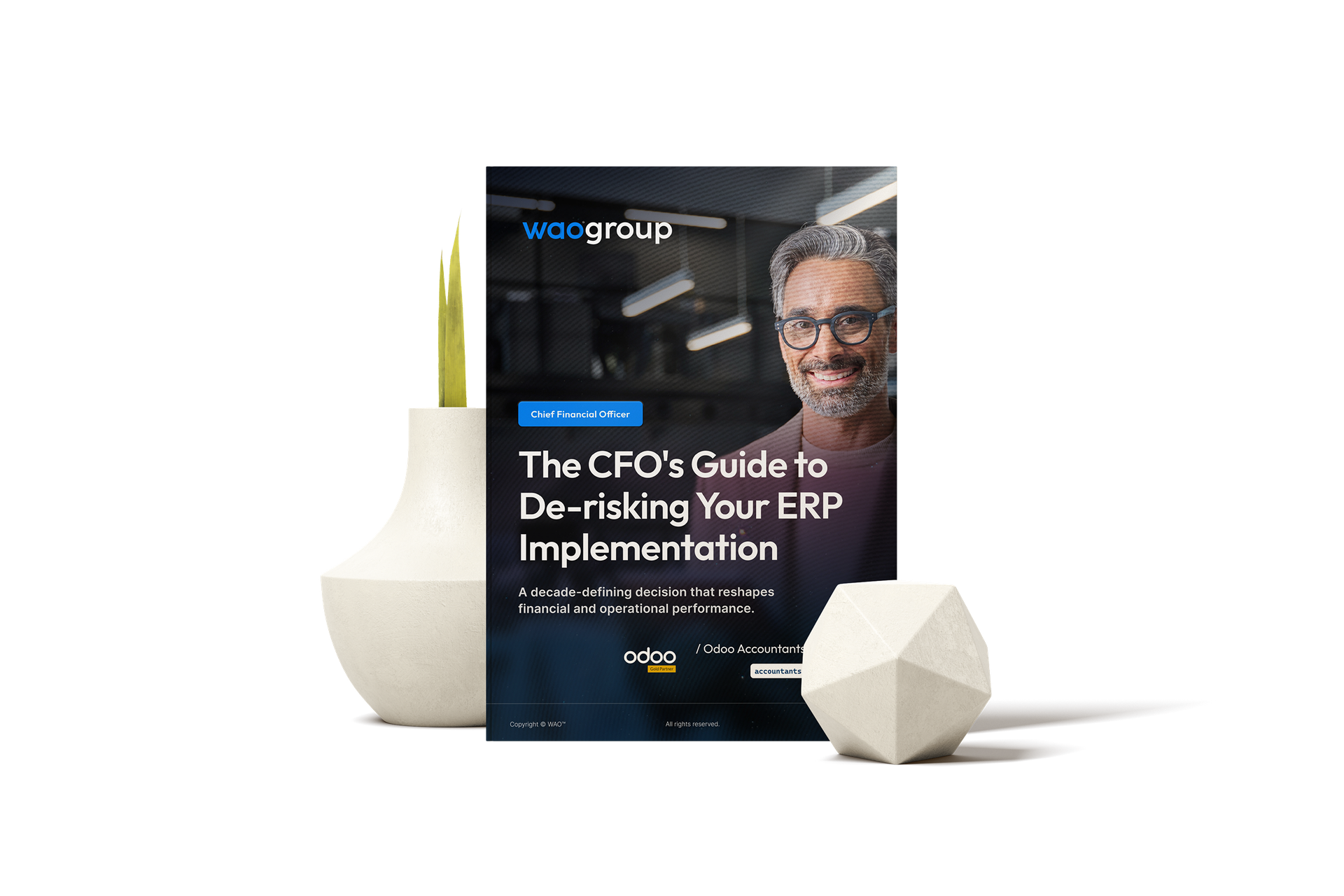
Download: The CFO's Guide to De-risking Your ERP Implementation
Before you invest in any ERP, learn the 5 critical financial mistakes that lead to budget overruns and failed projects. This free guide provides a practical framework for ensuring your next systems project delivers a clear and measurable ROI.
Not ready to talk to us yet? Take the free 5‑minute ERP Readiness Scorecard and see exactly where you stand.