At a glance
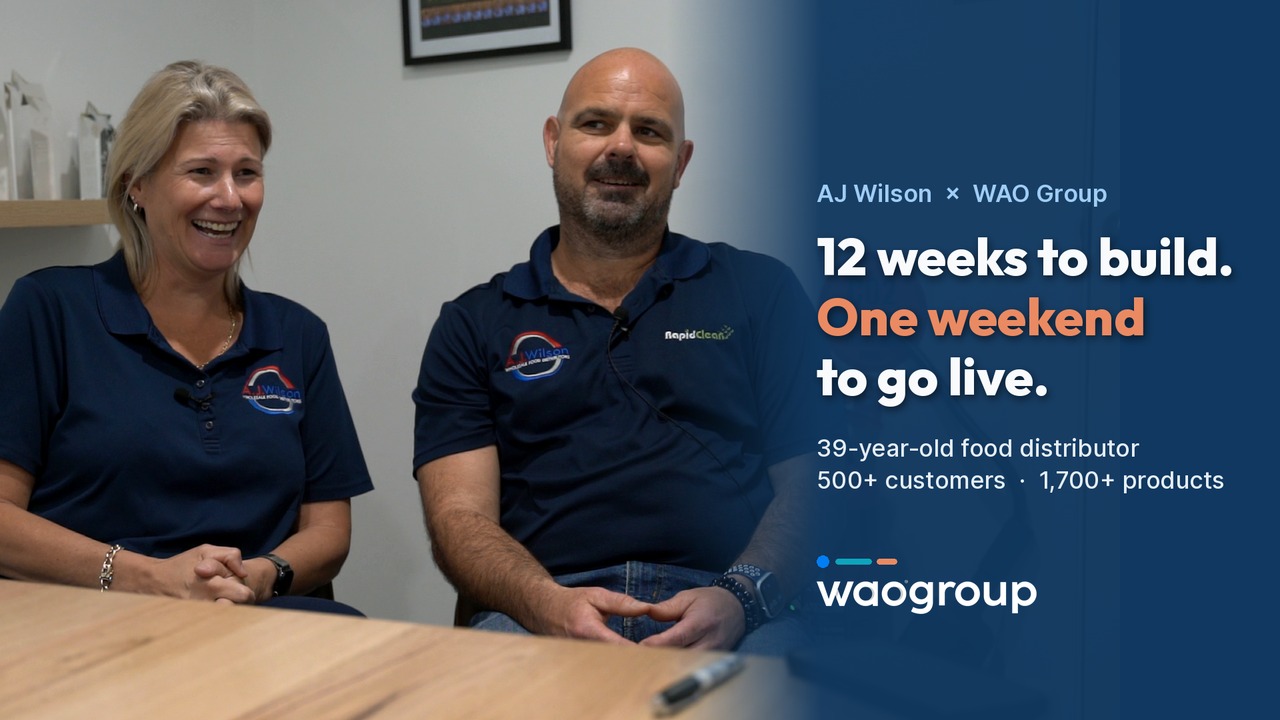
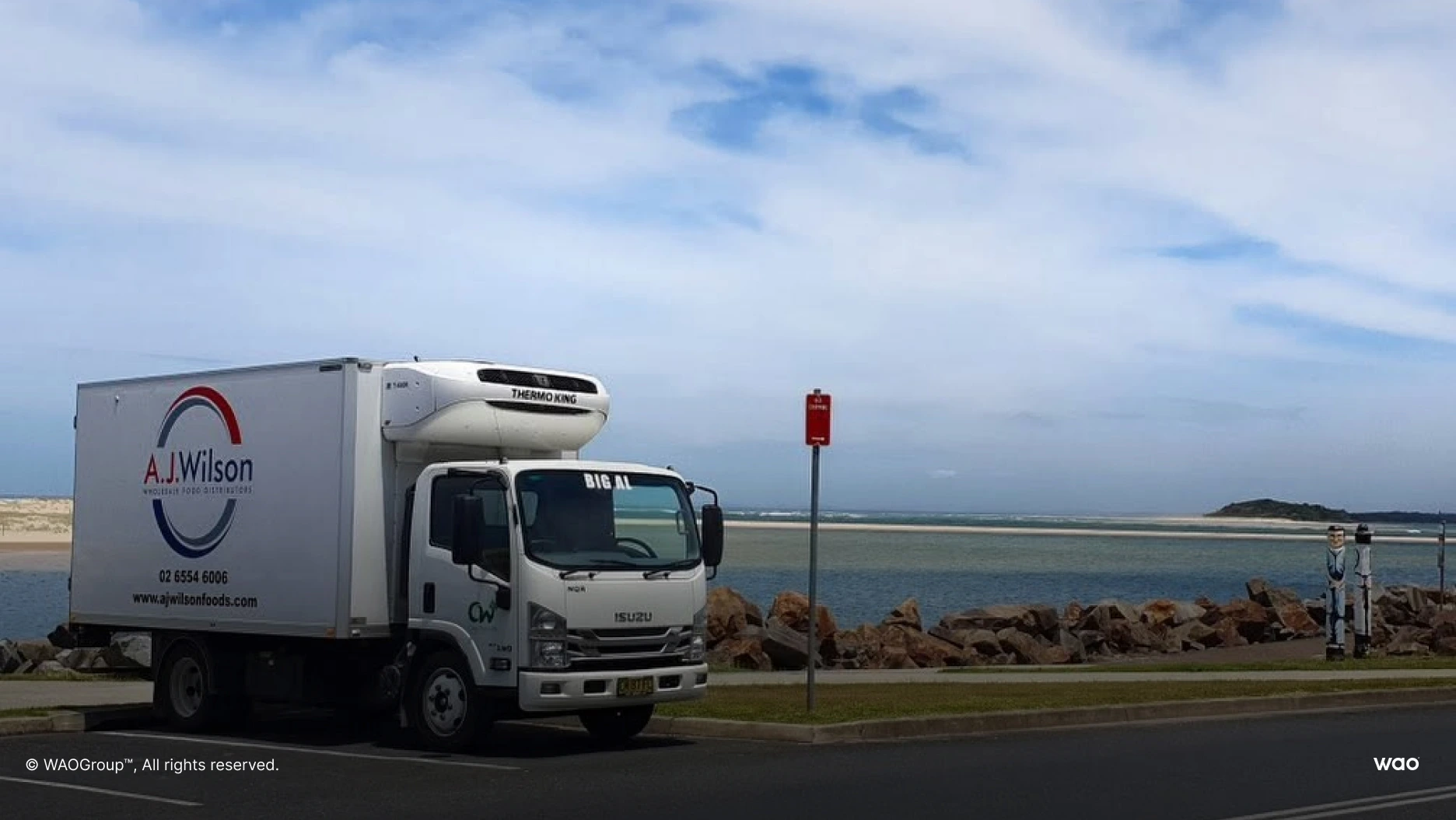
AJ Wilson has supplied pubs, clubs, restaurants, cafes and schools on the NSW Mid North Coast for 39 years. Today it serves more than 500 customers from a range of over 1,700 products, plus a retail counter where the public come in to buy. Managing Director Belinda Wilson and Scott Bradbrook (Sales & Operations) have run the business for the last 14 years.
- Client: AJ Wilson Wholesale Food Distributors, Forster NSW
- Industry: Food service wholesale distribution (B2B), with a retail counter
- Scale: 500+ customers, 1,700+ products
- Systems: Odoo, integrated with the Pepper customer ordering app
- Timeline: About 12 weeks to build, then a one-weekend cutover. Live on 1 June 2026.
- Partner: WAO Group, delivered remotely
Watch the customer story · 8:54
 8:54
8:54Chapters
Pick a chapter to play the story from that point.
- 0:00Intro
- 0:16Meet AJ Wilson
- 0:40Life before Odoo
- 1:22Choosing Odoo, and a partner
- 2:01The fear of change
- 2:17Go-live in a weekend
- 2:53A day in Odoo
- 3:48Everyone on the same page
- 4:41Real-time visibility
- 5:35Lessons learned
- 6:47Odoo + Pepper
- 7:23What’s next
- 7:51Advice for other businesses
Read the full transcript
0:00 · Intro
We could see stock straight away. We could see customers ordering straight away. It didn’t take as long as what we thought. And even the team turned around and said, “Oh, we should have done this sooner.”
0:16 · Meet AJ Wilson
So we’re a food service distributor, based in Forster, New South Wales. And we have over 500 customers. We have over 1,700 products. And we deliver to pubs, clubs, restaurants, cafes, schools, and we have a little bit of a retail range that the public come in to pick up from.
0:40 · Life before Odoo
A server-based platform made it very hard when we had outages. It was just limited to the capacity it could deliver for us. We found that online ordering was a little bit hard. It wasn’t easy from a customer’s perspective. It just didn’t flow. It was hard to get information out of. I think the other moment was our sales team. Sitting down with them and seeing what visibility they had, or actually what they didn’t have, and how much time it took them to get the information out for their customers.
1:22 · Choosing Odoo, and a partner
They said, “Well, you’re going to use Pepper, you’re going to need to use a partner. You can’t use it out of the box.” We liked that you guys were just up the road, in Port Macquarie. That meant you knew what we were facing, and it made it a bit more real. I think the clincher was the fact that you guys were so close. If we had an issue, you could be on site. And it probably didn’t matter if they had experience with another food service distributor, because we didn’t want to do the same as them either. When we spoke to you guys, it was more of a discovery. This is how the program works. How does your business work, and how can we morph it together?
2:01 · The fear of change
Just change in general. We’d only had our program for two years. Usually you’d hold onto it for maybe five or so years. So we were concerned about the team, and the change management and adoption.
2:17 · Go-live in a weekend
It was Saturday at 11am, and then on at 6am on Monday. The adoption rate, after two weeks it was just old hands. Because we moved live with another program at the same time, it was seamless after a couple of weeks. We could see stock straight away. We could see customers ordering straight away. It didn’t take as long as we thought. And even the team turned around and said, “Oh, we should have done this sooner.”
2:53 · A day in Odoo
When we first start in the morning, no matter who you are, warehouse manager, the warehouse team, the office, the ability for anyone to print out all our pick slips for the day is seamless. We’ve never had that before. Then we key in the orders that haven’t come in online. The guys start the picking and packing, and when it comes back in, it’s just invoicing. They get their invoice straight away. When we come in every morning, we’ll have all of our orders ready to go, and at one press of a button you can print it all out to the warehouse. Once the boys have picked all the orders and packed them onto the trucks, I’ll invoice, email copies off to all of our customers, and assign our truck runs.
3:48 · Everyone on the same page
Communication through Odoo itself. You message office to the warehouse, to the sales team, to management. You tag everyone: “Hey, we’ve got an issue with this on the road, can we sort it out?” So that’s one big thing, the communication piece. It’s all within the program. We’re not trying to do something off an email or a text message all the time. We never had that, and we spent a lot of manual time getting answers to go back to customers. So just the small communication piece is huge for us. And it just means customers are happy, more sales.
4:41 · Real-time visibility
For the sales reps, having the ability to see dates for perishable products coming up, to see on-hand stock, what they need to move, any pre-orders, any special orders, they’ve got that in real time. That just means we’re not sitting on stock, or it’s not forgotten about. We love the dashboard app. I think that’s just been a bit of a game changer for us, knowing where we’re at financially. I also think accounts receivable, the follow-ups that we can implement. I believe that saved us a lot of time as well. So the cash flow that’s coming through is a lot better than what it’s been. I think we’ve actually grown the amount of products that we stock, from the 1st of June going live to now. I think we’re probably up 200.
5:35 · Lessons learned
I think with the remote implementation, it was seamless. There were no hiccups, it was smooth sailing. The team was fantastic. Madura’s amazing. He’s in sync every single time. The spreadsheets are updated. He keeps us on track. He talks about clean data all the time. We still do that now. We go back to those lessons learned from the very start. We need to make sure this is right if we’re going to implement it. I think the migration was harder than I thought it would be. That weekend migration, probably because our data wasn’t that clean. The AR, the AP, stock on hand numbers, things like that. Make sure you’ve got very clean data, and it needs to be consistent the whole way through. If you’ve got capitals in one and not in the other, they can be picked up as completely different products or towns, and skew it a fair bit.
6:47 · Odoo + Pepper
We went live with Pepper at the same time we went live with Odoo, because we still needed to run a business. We were surprised at how well it worked with both the Pepper team and the Odoo team. The way we all integrated together, we all worked seamlessly. There was no “that’s not my job, that’s not my role, this isn’t my scope.” It really worked.
7:23 · What’s next
The next step for us is: what can we automate? What are we still doing that’s maybe a bit antiquated? What efficiencies can we get with technology, whether it’s AI or barcode scanning? I feel like that’s our next piece next year. And what other add-ons might work well for us, to make it a little bit more efficient.
7:51 · Advice for other businesses
Work out what your problems are with what you’re doing now, what you can’t get, and write that down. Your program might be all right, but what are you struggling to get out of it? That’s what we did, and worked out we’d get more efficiencies doing it this way. Being a live program was probably the big thing. Odoo encompasses everything. You have one throat to choke, one piece of information you can look at, and you’re not pulling in from other sources. It’s just one snapshot. I think it’s definitely worthwhile to have a look at Odoo. It’s been amazing for our business. We’ve really grown with it. From our perspective, we loved our relationship with you guys. We’ve loved the relationship with the whole team.
The challenge
AJ Wilson had already changed systems once, moving off an older server-based platform that struggled with outages and capacity. But the replacement still left the team chasing information. Online ordering “just didn’t flow”, and the sales team couldn’t get what they needed on the road.
“I think the other moment was our sales team. Sitting down with them and seeing what visibility they had, or actually what they didn’t have, and how much time it took them to get the information out for their customers.”
Belinda Wilson, Managing Director, AJ Wilson
They wanted one system for the warehouse, the office and the back end, rather than separate tools bolted together.
Why Odoo, and why WAO Group
AJ Wilson compared Unleashed, DEAR and Odoo. They chose Odoo, and Odoo recommended working with a partner to integrate their customer ordering app, Pepper. AJ Wilson chose WAO Group, based up the road in Port Macquarie.
“When we spoke to you guys, it was more of a discovery. This is how the program works. How does your business work, and how can we morph it together?”
Belinda Wilson, Managing Director, AJ Wilson
FREE ASSESSMENT
Not sure if you're ERP-ready?
Take the free scorecard ➔
The implementation: 12 weeks to build, one weekend to switch
WAO ran the project remotely over about 12 weeks of configuration, data migration and training, with a weekly rhythm and clear owners for every task. The cutover itself took one weekend. Odoo and Pepper went live together on 1 June: the old system closed at 11am on Saturday, and AJ Wilson was trading on Odoo at 6am on Monday.
“After two weeks it was just old hands. We could see stock straight away. We could see customers ordering straight away. And even the team turned around and said, ‘Oh, we should have done this sooner.’”
Belinda Wilson, Managing Director, AJ Wilson
The hardest part was the data. Migrating receivables, payables and stock on hand showed where records weren’t clean, and WAO’s project lead Madura kept the team focused on data quality throughout.
“He talks about clean data all the time. We still do that now.”
Belinda Wilson, Managing Director, AJ Wilson
The results
- One-click mornings: anyone in the business prints the day’s pick slips at once, and customers get invoices by email as soon as orders are packed.
- Faster purchasing and invoicing: purchasing saves the most time, and Blake in purchasing invoices ten orders at once instead of one at a time.
- Better cash flow: automated receivables follow-ups mean “the cash flow that’s coming through is a lot better than what it’s been.”
- Real-time visibility: sales reps see on-hand stock, perishable dates and special orders on the road. Management sees where the business stands financially on the Odoo dashboard: “a bit of a game changer.”
- Everyone on the same page: the office, warehouse, sales and suppliers communicate inside Odoo instead of by email and text.
- Room to grow: AJ Wilson has added around 200 products to its range since going live.
What’s next
AJ Wilson is now looking at automation, barcode scanning and AI to remove the remaining manual steps.
“I think it’s definitely worthwhile to have a look at Odoo. It’s been amazing for our business. We’ve really grown with it.”
Belinda Wilson, Managing Director, AJ Wilson
Running a wholesale or food service business on systems that no longer keep up? See how we approach Odoo for wholesale distribution, or book a fit call and we will tell you honestly whether Odoo is the right answer for you.
GET STARTED
Ready to talk to an Odoo expert?
Book a free consultation ➔
The information and tips shared on this blog are meant to be used as learning and personal development tools as you launch, run and grow your business. While a good place to start, these articles should not take the place of personalised advice from professionals. As our lawyers would say: “All content on WAO’s blog is intended for informational purposes only. It should not be considered legal or financial advice.” Additionally, WAO is the legal copyright holder of all materials on the blog, and others cannot re-use or publish it without our written consent.