Xero is a genuinely excellent accounting platform. For the right business — one that needs clean invoicing, bank reconciliation, BAS lodgement, and payroll — it does the job well. Australian compliance is solid, the interface is polished, and the add-on ecosystem is extensive. So why are so many Australian businesses looking for Xero alternatives in 2026?
There are two distinct reasons. The first is that some business owners find Xero's pricing has crept upward while their needs have remained simple — they want something more straightforward or more affordable. The second, more common reason is that their business has genuinely outgrown what accounting software can do. Inventory management, production planning, multi-entity consolidation, and complex supply chain management are not Xero problems — they are category problems. No amount of tweaking an accounting platform solves them.
If you are not sure which camp you fall into, our guide to the 10 signs your business has outgrown Xero is the right starting point. If you already know you need an alternative and you want a direct comparison of your options, this is it.
Two Types of Xero Alternatives for Australian Businesses
The market for Xero alternatives splits cleanly into two categories, and understanding which you actually need saves an enormous amount of time during the evaluation process.
Lateral Accounting Alternatives
Tools like MYOB, QuickBooks Online, Reckon One, FreshBooks, and Cashflow Manager — sit in the same software category as Xero. They handle the core features of Australian accounting: bank feeds, bank reconciliation, invoicing, payroll reporting, GST, and BAS lodgement. If your issue with Xero is price, user experience, or a specific feature gap in the accounting layer, a lateral alternative is the right move. A good accountant or bookkeeper can manage the migration. The switch is relatively low-risk.
ERP Alternatives
Platforms like Odoo, NetSuite, MYOB Acumatica, and Pronto Xi — are a different category entirely. Enterprise resource planning software replaces not just your accounting system but the entire ecosystem of tools around it: inventory, production, purchasing, CRM, payroll, and eCommerce, all connected in a single platform. The jump in capability is significant, and so is the jump in implementation investment. But for the right business, it eliminates the patchwork of disconnected tools that is quietly costing you money every day.
The decision between these two paths comes down to one honest question: is your problem with the accounting layer, or with the operational layer?
Best Accounting Software for Australian Small Businesses and Sole Traders
If your business is well-served by accounting software and you simply want a different product — different pricing, a different interface, or a feature that Xero handles poorly — here are the main options in the Australian market.
MYOB Business (formerly MYOB Essentials)
MYOB is the most direct Xero competitor and arguably the most deeply embedded accounting software in the Australian market. MYOB Business covers all the core features — invoicing, bank feeds, bank reconciliation, payroll reporting, BAS, and basic inventory tracking — with a depth in Australian accounting compliance that reflects decades of building specifically for this market.
The interface is less polished than Xero's, but many Australian accountants and bookkeepers prefer it for businesses with complex payroll, high transaction volumes, or unusual GST situations. Its payroll system handles Single Touch Payroll Phase 2 well, and the general ledger reporting is comprehensive. If your accountant already works in MYOB, switching can simplify your working relationship and potentially reduce accounting fees. MYOB Business also offers phone support for its paid plans — a meaningful advantage when you need help fast.
MYOB Business is best suited to: small and medium businesses that need mature Australian accounting compliance, businesses with complex payroll requirements, and businesses whose accountant recommends it.
QuickBooks Online
QuickBooks Online is a strong cloud accounting platform with a clean interface that many Xero users find immediately familiar. Its Australian accounting feature set has improved considerably in recent years — STP Phase 2 payroll is included, BAS support is solid, and bank feeds work reliably across Australian banks.
QuickBooks Online is a particularly good fit for service businesses that need solid financial management and expense tracking without complex inventory requirements. Its project management and job costing features are more capable than Xero's in some areas, though still well short of what a full ERP provides. The add-ons ecosystem is narrower in Australia than Xero's, which is worth checking if you rely on specific integrations.
QuickBooks Online is best suited to: service businesses, fast growing businesses in professional services, and businesses migrating from QuickBooks Desktop who want to move to the cloud. It includes training resources and in-app guidance that help new users get up to speed without needing an accountant to configure everything.
Reckon One
Reckon One is an Australian-built cloud accounting platform with a modular pricing structure that lets business owners pay only for the features they actually use. Its lower entry point includes Accounting Plus at $24/month, which makes it a practical option for budget-conscious businesses. Accounting Plus also includes unlimited invoices, so Reckon offers unlimited invoices without needing higher paid plans.
The feature set is narrower than Xero's. Bank feeds, invoicing, and payroll are covered, and Australian accounting compliance is genuine. But the add-on ecosystem is limited, and the platform has not kept pace with Xero or MYOB in terms of automation and workflow sophistication. For very simple requirements, Reckon One delivers solid value because the essential features are available without forcing an upgrade path, backed by transparent pricing. For anything more complex, you will bump into its ceiling quickly.
It also includes free phone support during business hours and free onboarding sessions with every plan, giving users direct access to help that many businesses value.
Eligible plans also include free migration from Xero.
FreshBooks
FreshBooks is primarily aimed at freelancers, sole traders, and very small service businesses. Its invoicing experience is polished and the client-facing features are genuinely excellent — unlimited invoicing on all paid plans, recurring invoices, automated payment reminders, and a clean client portal make it popular with consultants and creatives. It is built for non accountants, with simple language and an interface that requires no accounting knowledge to use day-to-day.
As a full-featured Australian accounting platform it has meaningful gaps. BAS support is limited, the payroll system is not built for Australian compliance, and financial reports are less comprehensive than Xero's. If you have staff, complex GST obligations, or need proper Australian accounting, FreshBooks is not the right fit. For a sole trader billing clients with simple requirements, it is worth a look.
Cashflow Manager
Cashflow Manager is a long-standing Australian accounting and cash flow management tool designed specifically for very small businesses and sole traders who find cloud platforms like Xero over-engineered for their needs. It covers the basics — income and expense tracking, bank reconciliation, BAS preparation, and basic payroll — in a simple interface that requires minimal accounting knowledge to operate.
It is not a platform for growing businesses or anyone with complex financial operations. But as an affordable, simple accounting tool for micro businesses, it occupies a legitimate position in the Australian market that Xero arguably does not compete in on price. For micro businesses with a handful of transactions per month, Cashflow Manager is worth serious consideration.

Core Features to Look for in Cloud Accounting for Australian Business Owners
Whether you are evaluating lateral Xero alternatives or just want to ensure any accounting software you consider covers the essentials, these are the core features that matter for Australian businesses — and why checking plan limits matters, since Xero's Starter plan costs around $37/month and limits users to 20 invoices per month:
Bank feeds and bank reconciliation. Every credible cloud accounting platform in 2026 offers automated bank feeds from Australian banks. What varies is the quality of the matching algorithms and how much manual work remains. Test this against your actual bank before committing.
Australian payroll compliance. STP Phase 2 is now mandatory. Ensure any payroll system you evaluate is certified compliant and handles superannuation, PAYG withholding, and leave accrual correctly for Australian awards and agreements.
BAS and GST. BAS lodgement and GST reporting must be handled natively — not as an afterthought. Some international platforms technically support Australian accounting but require significant manual configuration to produce a compliant BAS. Ask specifically, and ask for a demo.
Financial reports and general ledger. Monthly management accounts, P&L, balance sheet, and cash flow statements should be accessible without manual spreadsheet work. If your financial reports require significant manual assembly every month, the platform is not doing its job.
Bank transactions and expense tracking. Automated bank transaction categorisation, receipt capture, and expense tracking reduce the manual bookkeeping burden. Most cloud accounting platforms offer this; quality varies.
Multi currency support. If you trade internationally, multi currency support is essential. Not all platforms handle multiple currencies equally — check how foreign exchange gains and losses are treated and whether BAS calculations handle AUD correctly for overseas transactions. Global platforms may handle multi currency better on paper but sometimes lack the localised Australian accounting capabilities needed for BAS and STP compliance.
Customer support and phone support. This is underweighted in most software comparisons. When something goes wrong with your payroll or BAS, you need accessible, knowledgeable support. Check response times, whether phone support is available (not all platforms offer it), and whether Australian-based support is on hand. Some providers still rely mainly on email-only support with 24+ hour response times, as seen with Xero. Support quality matters most at tax time and during payroll needs, when delays create risk. Australian accountants regularly report that platform support quality is the factor that most affects day-to-day satisfaction once you are past the initial setup.
Best Xero Alternatives for Growing Businesses: Enterprise Resource Planning
If your real problem is that accounting software cannot manage your operations — inventory management, production, multi-entity consolidation, supply chain management — then a lateral switch to MYOB or QuickBooks will not fix it. You need a different category of business software: an ERP platform.
Here is an honest assessment of the leading ERP alternatives for Australian businesses in 2026.
Odoo — Best Value ERP for Australian Businesses
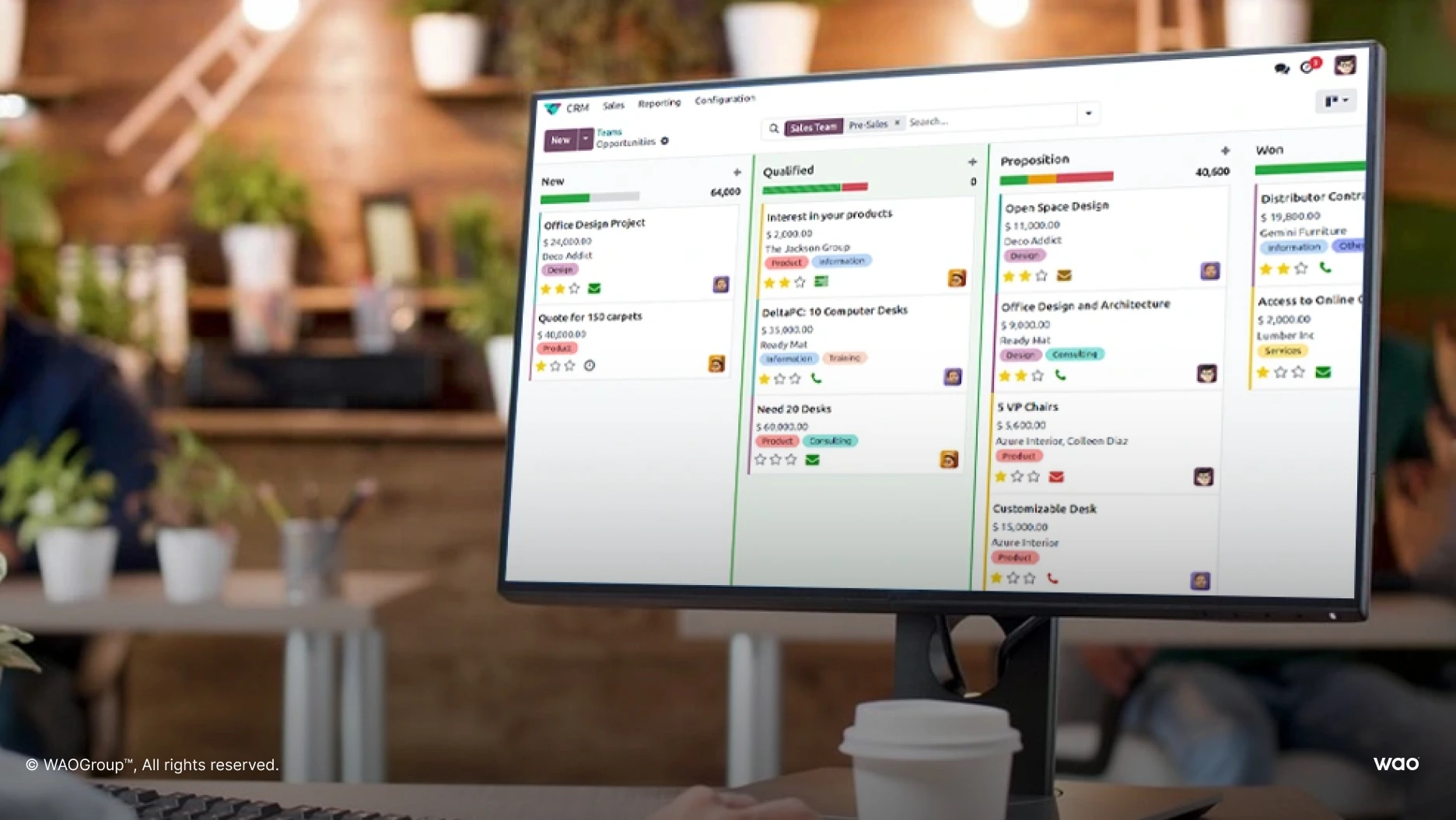
Odoo is an open-source, modular enterprise resource planning platform that covers accounting, inventory management, manufacturing, purchasing, CRM, eCommerce, and payroll — all in a single integrated system. For Australian businesses that have genuinely outgrown Xero and want to replace their entire patchwork of tools with one platform, it is the most compelling option in the SME market.
The fundamental difference from Xero is operational breadth. When a sales order is raised in Odoo, it can automatically trigger a purchase order, draw stock from inventory, update the production schedule, and post the actual cost to the P&L when the job is complete — with no manual data entry between steps. That end-to-end automated workflow is what accounting software cannot replicate, regardless of which add ons you attach to it.
For Australian compliance, Odoo handles STP Phase 2, BAS, GST, and multi-entity consolidation natively. The Odoo payroll module for Australia supports complex awards and modern entitlements. For manufacturers, wholesalers, and distributors, the Odoo manufacturing and inventory module replaces the need for a separate warehouse management system and provides full bill of materials, work order, and MRP functionality.
Odoo also supports automated workflows across every module — so when stock drops below minimum levels, a purchase order is generated automatically; when a timesheet is approved, it flows directly into payroll without re-entry. For businesses spending significant time on manual data coordination between systems, this is where the real efficiency gain lives.
Odoo is most suitable for:
Manufacturing, wholesale, and distribution businesses that need inventory management, production, and purchasing integrated with accounting.
Growing businesses with 10–200 staff ready to replace their collection of disconnected tools.
Multi-entity groups that need consolidated financial reports across companies.
Businesses that want a single vendor and a single source of truth for operational and financial data.
Australian businesses evaluating supply chain management tools that integrate natively with their accounting.
If you have already decided to move from Xero to Odoo, our detailed guide to migrating from Xero or MYOB to Odoo in Australia covers the migration process, data migration options, and what to expect during implementation.
NetSuite — Enterprise ERP for Larger Australian Businesses
NetSuite is Oracle's cloud ERP platform and one of the most widely deployed enterprise resource planning systems globally. It is comprehensive — financials, inventory, manufacturing, CRM, and eCommerce — and handles multi-currency support, multi-entity consolidation, and global operations well. NetSuite's financial reports and general ledger capabilities are among the most sophisticated available.
The trade-off is cost and complexity. NetSuite is priced for businesses with annual revenue above $10–20M, and implementations are substantial projects. For most Australian small businesses evaluating Xero alternatives, NetSuite is either too expensive or more complex than their current stage warrants. For larger businesses with the budget to match, it is an excellent platform.
MYOB Acumatica (formerly MYOB Advanced)
MYOB Acumatica is MYOB's mid-market cloud ERP, built specifically for the Australian and New Zealand market. It covers manufacturing, distribution, retail, and professional services, with deep Australian accounting compliance built in from the ground up — BAS, STP Phase 2, and local tax requirements are native, not bolted on.
MYOB Acumatica is a strong option for Australian businesses that want the depth of an ERP platform with the reassurance of a well-known local brand and a strong local support network. Implementation costs and ongoing licensing sit above Odoo but below NetSuite. The payroll system is mature and the inventory management module is robust.
Pronto Xi
Pronto Xi is an Australian-built ERP with a long track record in the mid-market manufacturing and distribution sector. Its inventory management, supply chain management, and manufacturing capabilities are strong, and its Australian accounting compliance is excellent. Implementations tend to be significant projects suited to established businesses rather than fast-growing SMEs.
For Australian manufacturers wanting a locally-built platform with decades of domain experience, Pronto Xi remains a relevant option. It is less commonly recommended for businesses earlier in their ERP journey.
Xero vs Odoo: Enterprise Resource Planning Comparison for Australian Businesses
Feature | Xero | Odoo |
Australian accounting and BAS | ✓ Excellent | ✓ Full AU compliance |
Bank feeds and bank account connections | ✓ Comprehensive | ✓ Included |
STP Phase 2 payroll reporting | ✓ Included | ✓ Included |
Expense tracking | ✓ Included | ✓ Included |
Financial reports and general ledger | ✓ Strong | ✓ Strong |
Inventory management | Basic (limited) | ✓ Full multi-warehouse |
Manufacturing / production | ✗ Not available | ✓ Full BoM, work orders, MRP |
Purchase orders and supply chain management | Basic | ✓ Full procurement module |
CRM | ✗ Third-party add ons only | ✓ Included |
eCommerce | ✗ Third-party add ons only | ✓ Included |
Multi currency support | ✓ Included | ✓ Included |
Multi-entity / consolidation | ✗ Separate subscriptions | ✓ Native multi-company |
Job costing | Limited | ✓ Full actual vs quoted |
Automated workflows | Limited / via add ons | ✓ Cross-module automation |
Multiple locations support | Limited | ✓ Full multi-warehouse/location |
Pricing model | Per user / per month | Per user / per month |
Migration service available | N/A | ✓ Via implementation partner |
How Australian Small Businesses and Sole Traders Should Choose
The right Xero alternative depends on what you actually need — and that question deserves an honest answer rather than a feature checklist comparison.
If your problem is price: Reckon One or Cashflow Manager are cheaper than Xero. MYOB Business Lite is comparable in price but deeper in Australian accounting compliance. Whichever you choose, ensure payroll system compliance and BAS support are confirmed before you switch.
If your problem is interface or user experience: QuickBooks Online is the most natural lateral move for Xero users who want something that feels familiar but works differently. Give the accounts team a demo before committing — the platform that wins in an online comparison is not always the one people actually want to use every day. Think about whether the right software will save time on reconciliation and reporting each month, not just on paper.
If your problem is that Xero cannot do what your business needs: You are not looking for a better accounting tool. You are looking for enterprise resource planning software. The best Xero alternatives in this category for Australian businesses are Odoo (for SMEs wanting full capability at a competitive total cost), MYOB Acumatica (for those who want local compliance and local support), and NetSuite (for larger businesses with more complex requirements).
A note for sole traders and micro-businesses: If you are a sole trader billing clients and managing basic expenses, Xero may already be more than you need. FreshBooks, Cashflow Manager, or even a well-configured Reckon One subscription could save you money without meaningful capability loss. The goal is fit — not the most sophisticated platform you can afford.
What Does Switching from Xero Actually Cost in Australian Businesses?
The cost of switching depends heavily on which direction you go — and on being honest about what "cost" includes. That includes not just fees, but also migration effort and operational disruption, although most businesses can complete migration activities in parallel with normal operations when the project is planned properly.
Lateral accounting switch (Xero → MYOB, QuickBooks Online, or Reckon One): The direct cost is mostly a data migration and retraining cost. Most Australian migration services handle a basic Xero to MYOB or QuickBooks migration for a few thousand dollars. Ongoing licensing costs are broadly comparable. The hidden cost is accountant time and workflow disruption, and a poor platform fit can also drive up bookkeeping costs over time — factor this into the real comparison.
ERP switch (Xero → Odoo, NetSuite, or MYOB Acumatica): The licensing cost for an ERP platform is typically higher than Xero, and implementation is a meaningful investment. For a 10–30 user business moving to Odoo, total first-year cost — licensing plus a professional implementation — typically ranges from $30,000 to $120,000 depending on scope and the complexity of your operations. That is a significant number that needs to be weighed against the ongoing cost of staying on a platform that is constraining your growth.
The best starting point before committing to anything is a structured scoping conversation. WAO Group's Odoo Success Blueprint is a fixed-price scoping and design engagement that gives you a complete implementation plan, a realistic timeline, and a fixed project quote before you commit to a full implementation. It is designed specifically for Australian businesses evaluating a move from Xero or MYOB to Odoo.
Frequently Asked Questions
Free options for Australian businesses with genuine compliance requirements are limited. Wave Accounting is free but has poor Australian accounting compliance and no proper STP payroll. Odoo Community (the open-source version) has no licensing cost but requires self-hosting and significant technical expertise to configure for Australian compliance. For most business owners, the cost of a free platform is the time spent working around its limitations — the paid options are usually worth it.
Xero and MYOB Business are the two most widely used accounting software platforms for Australian small businesses, and either is a solid choice for businesses with straightforward accounting needs. For growing businesses that need inventory management or production capability alongside their accounting, the best accounting software is often not accounting software at all — it is an ERP platform that includes a proper accounting module. Odoo is the most compelling option in this category for Australian SMEs.
Yes. Most platforms support importing chart of accounts, contacts, and opening balances from Xero. Transaction history is more complex — most businesses choose a clean start date rather than migrating all historical data, keeping the old Xero file as a read-only archive for historical data access. Your implementation partner or accountant should manage the migration as part of the project. For detailed guidance on this process, our guide to migrating from Xero to Odoo covers the data migration approach in full.
Odoo is not a like-for-like Xero alternative — it is a step up in both capability and implementation complexity. If you only need cloud accounting, payroll, and BAS for your Australian business, Xero or MYOB Business is the better fit. If you need inventory management, manufacturing, supply chain management, purchasing, CRM, or multi-entity management in addition to accounting, Odoo is worth serious evaluation. It handles Australian GST, BAS, and STP Phase 2 natively, and it integrates all of those business functions into a single system rather than relying on add ons and manual workflows between platforms.
Yes. Odoo's Australian payroll module supports Single Touch Payroll Phase 2, superannuation, modern award interpretation, and PAYG withholding. The payroll system integrates directly with the rest of Odoo — so timesheets from manufacturing or project management feed straight into payroll without re-entry, and payroll costs post automatically to the P&L.
A typical Xero to Odoo migration for a 10–30 user business takes 8–16 weeks from project kick-off to go-live, depending on the scope of modules and the complexity of your inventory or manufacturing configuration. WAO Group's structured implementation methodology is designed to reduce that timeline without cutting corners on configuration quality.
WAO Group provides ongoing Odoo support after implementation — covering system updates, user questions, configuration changes, and new module rollouts as your business grows and evolves. Good customer support after go-live matters: we include structured onboarding, training resources, and a dedicated support channel so your team is never left without help when it counts. We support more than 60 implementations across Australia and hold a 98% client satisfaction rate.
MYOB Business (formerly MYOB Essentials) is an accounting software platform designed for small businesses — it covers invoicing, payroll, BAS, and basic inventory. MYOB Acumatica is a full mid-market ERP platform with manufacturing, distribution, and advanced inventory management capabilities. They share a brand but are fundamentally different categories of business software. If you are looking at MYOB as a Xero alternative, confirm which product you are actually evaluating before proceeding.
Not Sure Which Direction Is Right for Your Australian Business?
The honest answer is that it depends on your business, and getting it wrong is expensive — both in implementation cost and in the opportunity cost of staying on the wrong platform for years.
The best way to find out is a 30-minute conversation with someone who knows both Xero and the alternatives well enough to give you a straight answer, with clear communication throughout the selection process — including telling you when Xero is actually the right tool and you should stay on it. Some options stand out through automated compliance features for Australian users, as ProfitBooks does. Thriday combines banking and automated accounting in one platform.
WAO Group is an Odoo Gold Partner based in Australia. We work specifically with manufacturers, wholesalers, and growing businesses that have outgrown their current business software and need a single integrated platform to replace it. Our team holds nine certified Odoo experts — the second-highest Odoo certification count of any partner in Australia — and we have supported over 60 implementations across the country. Support models also vary widely, from ProfitBooks offering real-time chat support with response times under 10 minutes to Rounded scoring highest on customer support satisfaction among small software providers.
Not Sure If Odoo is Right For Your Business?
No obligation, no sales pitch. Just a straight conversation about whether Odoo is the right fit for your business — and if it is not, we will tell you that too.
The information and tips shared on this blog are meant to be used as learning and personal development tools as you launch, run and grow your business. While a good place to start, these articles should not take the place of personalised advice from professionals. As our lawyers would say: “All content on WAO’s blog is intended for informational purposes only. It should not be considered legal or financial advice.” Additionally, WAO is the legal copyright holder of all materials on the blog, and others cannot re-use or publish it without our written consent.