Choosing between Odoo and Micronet impacts system performance, hosting options, customization capabilities, and long-term scalability. For most Australian businesses aiming to grow, Odoo is the preferred ERP solution because it offers greater hosting flexibility, wider integration possibilities, a modern user experience, and scalable pricing models.
Below is a comprehensive comparison of Odoo vs Micronet for Australian businesses.
Odoo vs Micronet ERP Software: Key Differences
The main difference between Odoo and Micronet is flexibility. Odoo is a modern, modular ERP software platform built around web access, apps, APIs and configurable workflows. Micronet, now also known as Micronet HARMONiQ, has deep roots in Australian wholesale, distribution and inventory-heavy businesses, but its history is tied more closely to Windows-based and legacy desktop-style ERP systems.
Odoo offers multiple deployment paths, including Odoo Online, Odoo.sh, private cloud, on-premise and partner-managed cloud hosting.
Micronet HARMONiQ now offers Australian private cloud hosting through Macquarie Cloud Services, but older Micronet environments have commonly depended on local Windows infrastructure.
Odoo ERP is broader in scope, covering sales, CRM, accounting, inventory management, e commerce, manufacturing, human resources, marketing automation, project management and more.
Micronet HARMONiQ provides deep capabilities specifically designed for complex wholesale distribution and high-level inventory control.
Micronet HARMONiQ includes features designed for complex wholesale distribution, such as unique multi-dimensional metrics for inventory tracking.
For businesses comparing Odoo vs Micronet, the practical question is whether they want an ERP solution built around a specific distribution model or a flexible enterprise resource planning platform that can adapt as the business grows.
System Performance and Speed
Performance is one of the key considerations when comparing ERP software systems. A slow ERP platform affects sales teams, warehouse staff, finance users and management reporting because every delayed screen, stock lookup or invoice process adds friction to daily business operations.
Odoo’s performance depends heavily on hosting quality, database tuning and implementation standards. Odoo uses PostgreSQL, and properly sized servers with enough workers, memory, SSD storage and database optimisation can deliver fast response times, including sub-second page loads in well-configured environments. Odoo ERP features a modern and intuitive user interface that allows users without extensive technical knowledge to navigate the system quickly, enhancing the overall user experience.
Micronet’s performance picture is harder to verify independently. Some Micronet testimonials praise warehouse scanning, stock receipting, stocktaking and inventory workflows. However, anecdotal discussions around legacy Micronet environments often raise concerns about sluggish screens, peak-hour slowdowns, network dependency and older client-server infrastructure. Public benchmark data comparing Odoo and Micronet under the same warehouse, sales and accounting workload is limited.
Odoo is not automatically fast just because it is modern. Users on forums regularly warn that underpowered Odoo.sh instances, poorly written custom modules or inefficient database queries can slow down stock updates, barcode scanning and order processing. The important difference is that these Odoo issues are usually solvable through better infrastructure, code review and Odoo development practices. With Micronet, performance constraints may be harder to diagnose if they are tied to legacy architecture, private hosting limits or older desktop components.
Hosting and Infrastructure
Hosting is where Odoo stands out clearly. Odoo offers several infrastructure models, so businesses can choose the right balance of control, cost, compliance and technical expertise.
Odoo Online is a managed SaaS option for businesses that want simplicity.
Odoo.sh is a platform-as-a-service option for businesses needing custom modules, staging and Git-based deployment.
Self-hosted Odoo can run on private cloud, on-premise infrastructure, AWS, Azure, Google Cloud or Australian data centres.
Partner-managed Odoo hosting can provide local support, backups, staging environments and performance tuning.
Micronet HARMONiQ is hosted in Australia through Macquarie Cloud Services’ Launch Private Cloud, which is positive for data residency. Micronet also promotes Australian data sovereignty and managed infrastructure. That said, businesses running older Micronet versions may still deal with local Windows servers, office network dependency, remote desktop access or upgrade complexity.
The practical advantage of Odoo is choice. If an Australian business needs low latency for Sydney, Melbourne, Brisbane or Perth warehouses, Odoo can be hosted close to users. If a business needs tighter control for compliance, it can use private cloud or on-premise hosting. If a business wants lower administration effort, it can use Odoo Online or managed cloud hosting.
This flexibility matters because ERP platforms become central to business management. When hosting is fixed, scalability can become expensive or slow. When hosting is flexible, the ERP system can be adjusted as transaction volumes, users, warehouses and integrations increase.
User Interface and Experience
User adoption often determines whether an ERP implementation succeeds. If staff find the software system confusing, they fall back to spreadsheets, manual data entry and unofficial workarounds.
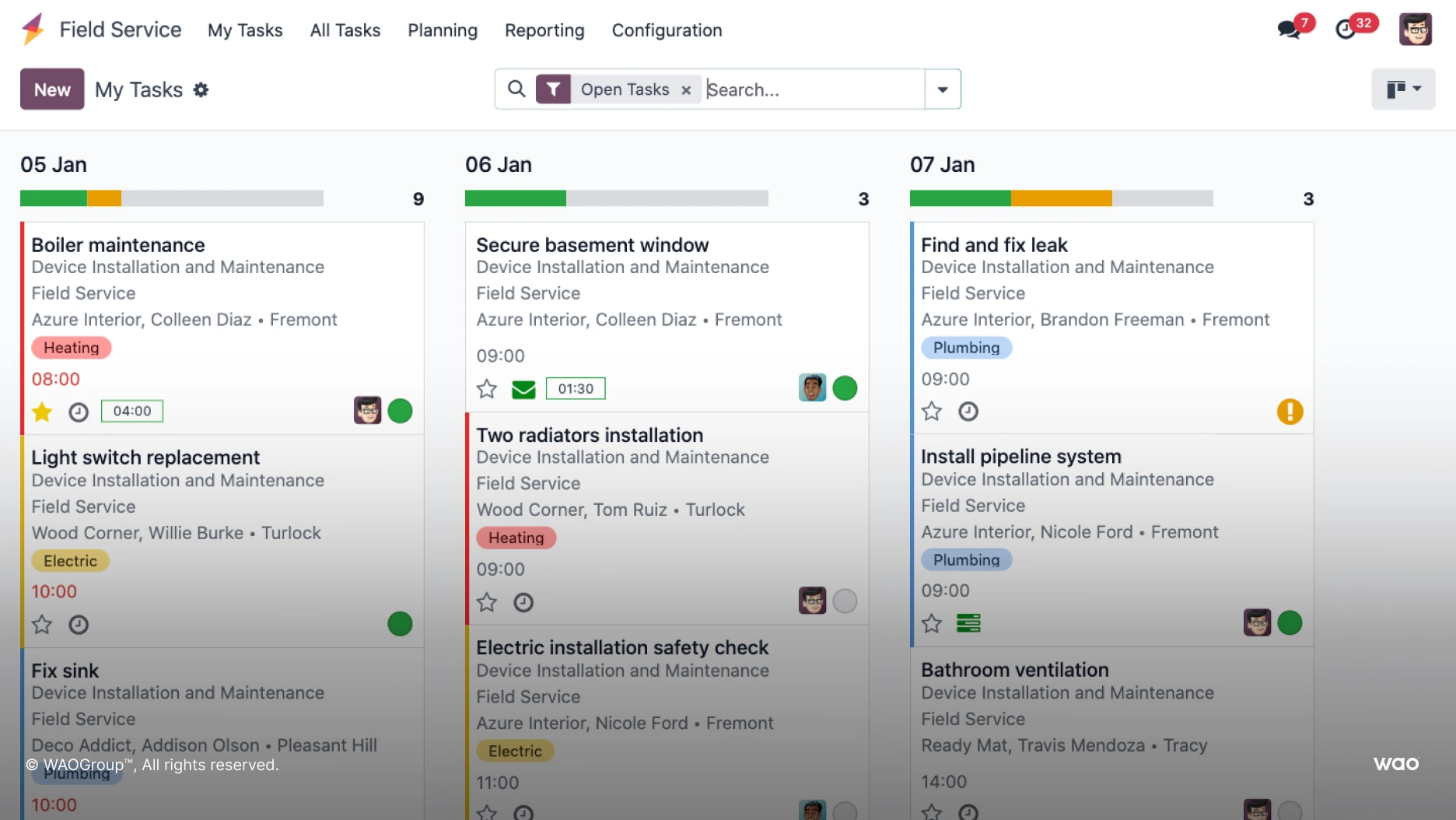
Odoo’s interface is browser-based, visual and relatively intuitive compared with many older ERP options. The user interface Odoo provides is consistent across apps, so users can move between sales, CRM, inventory management, accounting, project management and e commerce without feeling like they are switching between multiple systems. Odoo features a modern, visual CRM with integrated lead scoring and pipeline management, alongside native eCommerce solutions.
Micronet’s interface has improved through HARMONiQ, but its historical Windows desktop design can feel dated to users who expect modern web applications. New users may also face a steeper learning curve if workflows are heavily configured around traditional distribution, stock control or finance processes.
Odoo is not free of training requirements. The modular structure of Odoo allows businesses to customize their interface and workflows, which can lead to a steeper learning curve for users who are new to ERP systems. However, that learning curve usually comes from flexibility rather than outdated navigation.
For businesses seeking better customer satisfaction and staff adoption, Odoo’s modern UX is a major advantage. Mobile access, browser-based workflows and configurable dashboards make Odoo ERP suitable for growing businesses that need field staff, warehouse teams, managers and finance users working from different locations.
FREE ASSESSMENT
Not sure if you're ERP-ready?
Take the free scorecard ➔
Pricing and Total Cost of Ownership
Pricing is another major difference. Odoo’s pricing is generally more transparent than Micronet’s, although a proper ERP project still needs scoping for implementation, data migration, customisation, support and ongoing maintenance.
Odoo's pricing model for Australian businesses is modular, allowing businesses to pay only for the modules they use, which can lead to cost savings compared to other ERP solutions that often have fixed pricing structures. The Standard plan for Odoo starts at $7.25 per user per month when billed annually, while the Custom plan, which includes additional features, costs $10.90 per user per month. Odoo offers a free Community Edition for essential ERP functionality, in contrast to the paid enterprise edition, making it an attractive option for small businesses or those looking to customize their ERP without significant expenses.
Micronet pricing is less visible publicly. Businesses typically need a custom quote, and total cost can include implementation, support, upgrades, hosting, training, custom programming and any additional modules required. Anecdotal forum and user-group discussions around older ERP software often mention unexpected upgrade costs, maintenance fees and customisation charges; Micronet-specific public pricing evidence is limited, so businesses should ask for detailed 3–5 year cost modelling before committing.
Over a 3–5 year period, Odoo can be cost effective because businesses can start with core modules and add advanced features later. Odoo’s modular structure enables businesses to implement only the modules they need today and easily add features as they grow, preventing overpayment for unnecessary features.
The best ERP software is not simply the cheapest subscription. The best erp system is the one that reduces manual data entry, improves operational efficiency, supports business growth and avoids technical debt. On that basis, Odoo often provides stronger long-term value than other ERP software systems with less flexible pricing and infrastructure.

Customisation and Flexibility
Customisation is where Odoo has one of its strongest advantages. Odoo’s modular structure allows organizations to customize the program by adding or removing modules to meet their specific needs. Odoo is open-source, enabling businesses to tailor the system to fit their unique processes, including custom reports and specialized workflows.
Odoo includes Odoo Studio, a tool that allows users to develop customizations within the app without requiring coding knowledge, enhancing its flexibility. For more complex requirements, specialist Odoo customisation services can create custom modules, automate workflows, connect third party apps and build reporting tailored to unique business processes.
Micronet can be highly capable for businesses that fit its established vertical strengths. For example, wholesale distribution, tile, stone and inventory-intensive businesses may benefit from pre-built workflows such as batch controls, shade tracking, pricing matrices and complex stock handling. Micronet HARMONiQ features fully integrated end-to-end accounting tailored to Australian business regulations, including complex job costing.
The trade-off is adaptability. If your business processes align closely with Micronet’s model, implementation may be straightforward. If your processes are unusual, fast-changing or connected to e commerce, marketplaces, logistics systems or custom customer relationship management workflows, Odoo’s open source ERP solution is usually more flexible.
Odoo’s open-source nature provides significant flexibility in customization, allowing businesses to tailor their user experience to fit specific operational needs, although this may require more setup and maintenance compared to managed ERP solutions.
Integration Capabilities
Modern ERP systems rarely operate alone. Australian businesses often need seamless data integration between accounting, inventory, CRM, e commerce platforms, payment gateways, shipping providers, warehouse scanners, BI tools and existing systems.
Odoo’s design allows for seamless integration with third-party software and tools, making it an ideal option for businesses that need to connect their existing systems with the ERP. Odoo supports a wide range of third-party integrations, allowing businesses to connect with external applications, payment gateways, and shipping providers, enhancing operational efficiency. The open architecture and extensive API support of Odoo make it possible for businesses to build custom API integrations between Odoo and other systems that fit seamlessly into their existing business ecosystem.
Micronet supports integrations in areas such as inventory, accounting, online ordering and warehouse workflows, but its public API and third-party integration ecosystem are less visible than Odoo’s. This can matter for growing businesses that need to connect Shopify, WooCommerce, Magento, Amazon, courier systems, payment processors, BI dashboards or specialist professional services platforms, or implement EDI integrations between Odoo and trading partners.
Odoo also competes strongly against other top ERP software and other erp software options such as Microsoft Dynamics because it combines business applications, open architecture and modular implementation. For many organisations, understanding why Odoo is such a strong all-in-one ERP choice helps frame these comparisons. Odoo supports a wide range of industries by offering over 3,000 industry-specific applications that can be tailored to meet unique business needs, including sectors like healthcare, manufacturing, and retail.
For businesses planning future digital transformation, Odoo’s integration model is better suited to change. It helps avoid the problem of running multiple systems that do not talk to each other.
Support and Community
Support quality depends on the vendor, implementation partner and complexity of the ERP environment. Both Odoo and Micronet can work well with the right support model, but the available ecosystems are very different.
Odoo has a large global community, extensive documentation, forums, partner networks and community support. Odoo Community Edition is backed by open-source contributors, while Odoo Enterprise includes vendor-supported advanced features. Local partners can provide Odoo support and ongoing maintenance services, training, hosting, reporting, integrations and ongoing support for Australian businesses.
Micronet provides traditional support, training, helpdesk services and industry-specific knowledge. Its long history in Australia is a genuine advantage for businesses already using Micronet or operating in distribution sectors where Micronet has established workflows. However, the smaller public community means fewer independent guides, fewer community modules and less searchable troubleshooting material than Odoo.
Forum credibility is important here. Odoo forums and Reddit threads contain both praise and criticism, especially around performance, Odoo.sh sizing and custom module quality. That transparency is useful because problems are visible and solutions are widely discussed. Micronet-related user stories are less publicly documented, which can make it harder for buyers to independently assess support response times, implementation risks or upgrade experiences.
At WAO, we generally recommend pairing Odoo with a local Australian implementation partner rather than treating ERP as a simple software purchase. If you need help with an Odoo implementation or upgrade, the right partner reduces risk across hosting, training, workflow design, integrations, reporting and ongoing maintenance, and you can contact WAO Group to discuss your ERP plans.

Australian Business Compliance
Compliance is a critical factor for Australian ERP software. GST, BAS, payroll, superannuation, bank files, Peppol eInvoicing, data residency and financial reporting can all affect day-to-day operations.
Odoo Enterprise has strong Australian accounting localisation capabilities, including GST/BAS reporting, Single Touch Payroll support, ABA batch payments and Peppol eInvoicing. Odoo’s accounting can be configured for Australian financial management, and partner-led localisation can support more complex requirements. Odoo handles native multi-currency configurations globally, but local features may require external configuration.
Micronet has long served Australian businesses and includes integrated financials, accounting, inventory and job costing capabilities. Micronet HARMONiQ features fully integrated end-to-end accounting tailored to Australian business regulations, including complex job costing. This makes Micronet relevant for businesses with complex distribution, service or job-costing requirements.
The difference is clarity and extensibility. Odoo’s localisation roadmap and partner ecosystem make it easier to assess regulatory fit and extend the system when requirements change. Micronet may support many Australian requirements, but public documentation is less clear on areas such as STP Phase 2 parity, Peppol eInvoicing and the speed of regulatory updates.
For businesses with multi entity financial management, multiple warehouses or cross-border trade, Odoo’s configurable accounting, reporting and multi-currency capabilities can provide stronger long-term flexibility.
Target Business Considerations
Micronet is most relevant for businesses in wholesale distribution, inventory-heavy operations, tiles, stone, ceramics, service and similar sectors where its pre-built workflows match existing processes. For these distribution businesses, Micronet may reduce initial configuration work if the business does not need major workflow changes.
Odoo is broader. The modular nature of Odoo allows businesses to implement only the necessary applications for their current needs, such as inventory management or customer relationship management, and scale as they grow. Odoo allows businesses to start with the basic modules they need, and as their business grows and their needs change, they can add more, making it a scalable solution.
This makes Odoo suitable for small businesses, medium sized businesses, medium businesses and large enterprises that want a flexible ERP platform. Odoo Community Edition can suit technically capable small and medium businesses, while Odoo Enterprise is usually better for organisations that need official support, advanced features and smoother upgrades.
Odoo’s open-source platform enables businesses to customize their ERP solutions extensively, allowing for specialized workflows that cater to the specific requirements of various industries. The broader WAO Group blog on Odoo ERP explores many of these customisation, implementation and optimisation topics in more depth. Odoo’s open-source nature and extensive app marketplace allow for significant customization and scalability, enabling businesses to adapt the software to their evolving needs.
The decision should be based on business needs, not only current pain points. If a company expects more sales channels, more warehouses, more reporting complexity, more automation or more integrations, Odoo is usually the safer long-term ERP solution.
Odoo vs Micronet: Which Should You Choose?
Choose Odoo if you want a modern ERP platform with flexible hosting, strong integration capability, scalable pricing, a large app ecosystem, hr management and a better user experience. Odoo is especially strong for Australian businesses that want to streamline operations, reduce manual data entry, improve workflow automation and support business growth without being locked into a narrow system design.
Choose Micronet if your business is already deeply aligned with Micronet’s wholesale distribution model, needs high-level inventory control out of the box, and prefers an Australian private-cloud vendor with long experience in specific local industries.
For most growing businesses, Odoo is the better choice. It offers stronger flexibility, broader business applications, more transparent pricing, better integration options and a modern interface that can move the business forward. Odoo also gives businesses more ERP options: free plan via the Community Edition, paid SaaS, Odoo Enterprise, private cloud, on-premise and tailored implementations.
WAO recommends Odoo for Australian businesses seeking a future-ready ERP system because it can adapt as business processes change. With the right implementation, hosting and ongoing support, Odoo provides the foundation for better financial management, supply chain management, customer relationship management, inventory management and long-term operational efficiency.
GET STARTED
Ready to talk to an Odoo expert?
Book a free consultation ➔
The information and tips shared on this blog are meant to be used as learning and personal development tools as you launch, run and grow your business. While a good place to start, these articles should not take the place of personalised advice from professionals. As our lawyers would say: “All content on WAO’s blog is intended for informational purposes only. It should not be considered legal or financial advice.” Additionally, WAO is the legal copyright holder of all materials on the blog, and others cannot re-use or publish it without our written consent.