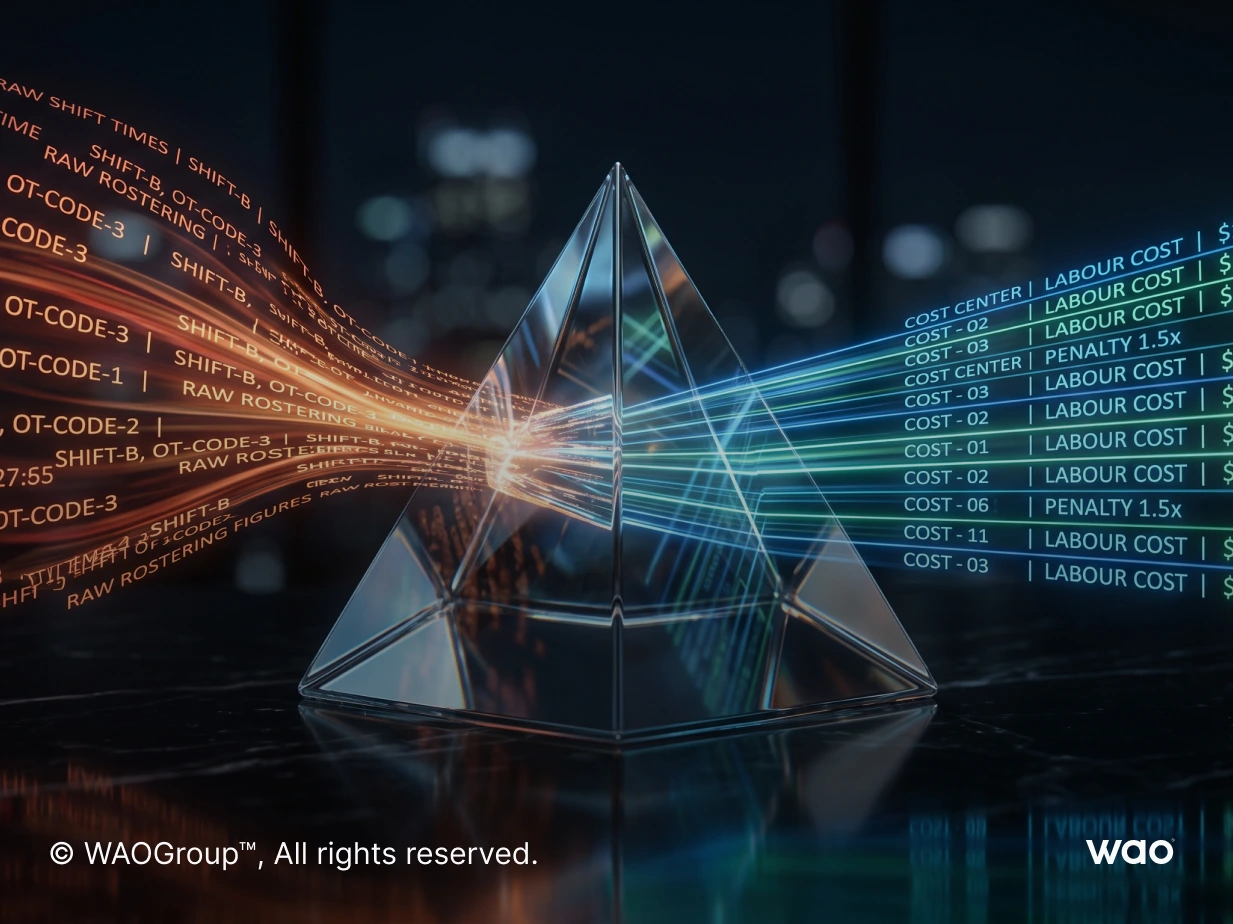
This is not an accounting problem. It is not a people problem. It is a systems architecture problem — and it is one of the most common operational issues WAO encounters in ANZ SME businesses. The inability to produce a reliable P&L on demand is almost never the result of bad accounting. It is the result of a tech stack assembled tool-by-tool, without a financial architect ensuring the pieces fit together properly.
The Four Structural Causes of Broken Financial Reporting
Cause 1: Disconnected Systems That Can't Agree
When your sales data lives in Shopify, inventory in Cin7, and financials in Xero, you do not have one source of truth — you have three. And they will disagree, regularly. A timing difference in how Shopify records a refund versus how Cin7 processes the stock reversal. A discount applied at point of sale in one system but not reflected in the invoice in another. These small discrepancies compound. By month end, your financial controller is spending two days reconciling them — and the P&L she produces is accurate only to a point.
Cause 2: Manual Reconciliation Lag
In a business running on disconnected accounting systems Australia, the finance team's job is largely reconciliation. Every transaction that originates in an operational system must be manually matched to a corresponding financial record. This takes time. The result: your P&L is always behind — not by a day or two, but by a week to two weeks. In a tight economy, a two-week-old P&L is not a management tool. It is a historical record.
Cause 3: A Chart of Accounts Not Built for Management Use
The chart of accounts is the financial skeleton of your business. Every transaction is classified according to it. If the COA was designed for tax compliance rather than management reporting — or copied from a template and never adjusted — the P&L it produces will be technically correct and practically useless. Common problems: gross margin reported at the company level but not by product line or channel; COGS includes overhead that should sit in operating expenses; revenue from different business units consolidated rather than reported separately. The numbers add up. They just do not tell you anything useful.
Cause 4: No Integration Between Operational and Financial Data
Your GM can see orders. Your CFO can see invoices. Nobody can see both in the same view. When gross margin drops by two points in Q3, you have the number but not the explanation — and finding the explanation requires a multi-system forensic exercise that takes weeks.
The WAO Difference
Most ERP partners configure the software correctly. WAO configures the financial architecture correctly — and then builds the software on top of it.We start every implementation by designing the chart of accounts, cost centre structure, and management reporting hierarchy before we touch a single module.
FREE ASSESSMENT
Not sure if you're ERP-ready?
Take the free scorecard ➔
If you checked three or more items, your financial reporting architecture has structural issues that will not be resolved by improving your current tools. They require an integrated system designed by someone who understands both the software and the accounting.
GET STARTED
Ready to talk to an Odoo expert?
Book a free consultation ➔
The information and tips shared on this blog are meant to be used as learning and personal development tools as you launch, run and grow your business. While a good place to start, these articles should not take the place of personalised advice from professionals. As our lawyers would say: “All content on WAO’s blog is intended for informational purposes only. It should not be considered legal or financial advice.” Additionally, WAO is the legal copyright holder of all materials on the blog, and others cannot re-use or publish it without our written consent.