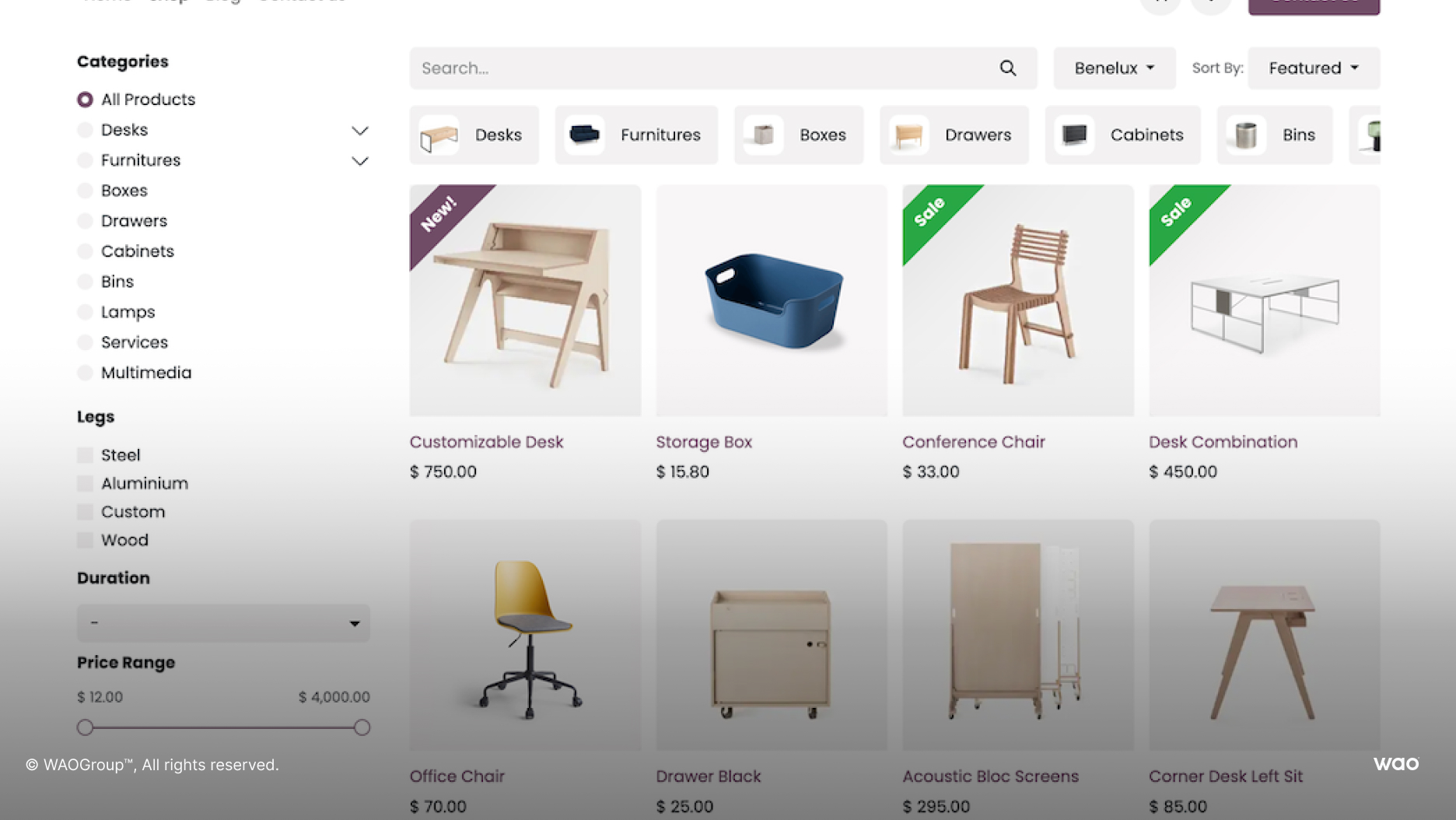
Choosing between Odoo e-commerce and Shopify affects integration capabilities, customization options, scalability and total cost of ownership. Odoo stands out by allowing you to seamlessly connect eCommerce, website, sales, and accounting functions into a unified system, making it easier to manage your entire business from one platform.
Below is a practical comparison of Odoo e-commerce vs Shopify for growing businesses.
Odoo E-Commerce vs Shopify: Key Differences
The fundamental difference comes down to platform architecture and business scope.
While Shopify is primarily a website builder focused on e-commerce, Odoo Website offers a more comprehensive platform that integrates website creation, CRM, and e-commerce features. However, its CMS capabilities are less advanced than dedicated CMS platforms like WordPress, which is designed for extensive content management.
Odoo is a fully integrated ERP solution that combines various business functions such as sales, inventory management, accounting, and marketing into one platform. The ecommerce module operates within this broader ecosystem, sharing a single database with all other business processes. The latest version of Odoo Website introduces new features and improvements for integrated business management.
Shopify is a dedicated, cloud-hosted SaaS platform designed specifically for building and managing online stores quickly. It focuses on storefront performance, checkout optimization and payment processing, with external systems handling back-office operations.
This architectural distinction shapes everything from daily operations to long-term scalability. Odoo suits companies seeking an all in one solution for complex operations, while Shopify targets businesses prioritising speed-to-market for their online store.
Pricing and Total Cost of Ownership
Understanding the true cost goes beyond monthly subscription fees. Odoo’s site pricing includes hosting and security, making it a more predictable and potentially cost-effective solution compared to platforms that require separate payments for these services.
This all-in-one approach means you get hosting, security, and marketing features for a single flat price, while other platforms may require additional paid plugins or themes to achieve a similar professional website setup.
Odoo E-Commerce Pricing Structure
Odoo operates on two editions with different cost models, and Australian businesses in particular should understand Odoo's pricing options for Australian customers before selecting a plan:
- Community Edition: Free open source erp software with no license fees. Costs arise from hosting, customization and support services.
- Enterprise Edition: Approximately US$31.10 per user/month for Standard, or US$61 per user/month for Custom plans with advanced features like Studio and multi-company support.
Odoo’s pricing structure includes hosting, security, and all marketing features in one flat price, which can be more cost-effective compared to platforms where additional costs for themes, SEO tools, and security plugins quickly add up.
Implementation costs vary based on scope—typically thousands to tens of thousands for medium-to-large businesses requiring workflow configuration, data migration and team training. However, the cost of using Odoo can be lower in the long run for businesses that require extensive features, as it provides a comprehensive suite of integrated applications.
Shopify Pricing and Hidden Costs
Shopify’s subscription model appears straightforward but accumulates additional expenses:
- Basic: US$29/month with 2% transaction fees on third-party payment processors.
- Grow: US$79/month with 1% transaction fees.
- Advanced: US$299/month with 0.6% transaction fees.
- Plus: Starting at US$2,300/month for enterprise features.
The real cost often emerges through the app marketplace. Many essential features—B2B functionality, advanced shipping, marketplace integrations—require paid apps. Monthly app subscriptions commonly reach $50–$150+ for a baseline store, plus theme licensing costs.
Odoo offers a free plan with a subscription model that includes a percentage for processing fees, while Shopify typically charges a monthly fee starting at $29 for its basic plan, which can increase based on additional features and services.
Integration & System Architecture
Platform integration capabilities determine operational efficiency and data flow.
Odoo’s Built-in Integration Advantage
The integrated nature of Odoo allows businesses to streamline their operations, minimizing errors and data discrepancies that often arise from using multiple disconnected systems.
Because Odoo apps share a single database, data flows are native and real-time:
- Orders automatically update accounting and inventory modules.
- Stock levels synchronise across multiple warehouse locations.
- Financial reports include ecommerce revenue immediately.
- CRM tracks customer interactions across all touchpoints.
This architecture eliminates manual data entry and reduces sync failures. Odoo’s ecosystem provides a seamless experience for eCommerce businesses, enabling them to focus on core activities like customer engagement and marketing without the burden of backend integration challenges.
Shopify’s Third-Party Integration Approach
Shopify extends functionality through its extensive app marketplace and third-party connectors. While this creates flexibility, it introduces complexity:
- External ERP connections require middleware or certified connectors.
- Data synchronisation operates through APIs with potential latency.
- Multiple vendors must be managed for a complete solution.
- API rate limits can affect high-volume operations.
Common challenges include inventory sync conflicts, order flow disconnects, and mismatched tax or discount logic between systems. For example, when both Shopify and an external ERP attempt to manage inventory, discrepancies frequently occur.
Free Assessment
Not sure if you're ERP-ready?
Take our free 5-minute ERP Readiness Scorecard — built by Australia's only accounting-led Odoo partner.
Take the free scorecard →
Customization & Flexibility
Customization capabilities affect how well the platform adapts to unique business requirements. Both Odoo eCommerce and Shopify offer customizable solutions, but Odoo's open-source nature allows for more flexible adaptation to unique business needs. The range of functionalities available in each platform also impacts how deeply businesses can customize their workflows and integrations.
Odoo’s Open-Source Flexibility
Odoo allows deep, custom development for unique workflows, while Shopify relies on its extensive theme and app store. This fundamental difference shapes customization depth, and many businesses benefit from expert guidance on whether to customise Odoo and how to do it effectively.
Odoo’s open-source nature empowers a thriving community, resulting in a vast repository of community-contributed applications that enhance customization capabilities. Businesses can:
- Access complete source code for unlimited modifications.
- Build custom workflows, fields and business logic.
- Create industry-specific modules and regional localizations.
- Self-host without vendor dependency.
While both Odoo and WordPress offer strong customization, Odoo is primarily an ERP platform that provides web customization as an additional feature, making it simpler for users who are already utilizing Odoo for other business processes.
Odoo offers extensive customization options that allow businesses to tailor their eCommerce experience to fit unique designs and requirements, unlike traditional themes that may limit flexibility.
Shopify’s Template-Based Customization
Shopify’s web builder provides theme customization through Liquid templating language. This works well for standard storefronts but has boundaries:
- Core checkout and payment flows are largely fixed.
- Significant functionality changes require apps or Plus tier.
- Deep business logic modifications face platform constraints.
- Custom data models must work within Shopify’s structure.
For non technical users wanting a polished storefront quickly, Shopify’s approach reduces complexity. However, businesses with specific needs often encounter limitations.
Scalability & Performance
Platform scalability determines growth potential and system performance under load. Efficient processing of high volumes of transactions is crucial for maintaining performance, especially as businesses scale and require their eCommerce platform to handle increased sales activity without delays or disruptions.
Odoo Scalability for Complex Operations
Odoo scales by integrating additional business modules (accounting, HR, CRM) on top of the website. This creates a unified system that grows with operational complexity:
- Multi-company and multi-warehouse management from a single interface.
- Manufacturing, quality control and maintenance capabilities.
- Batch tracking and advanced inventory routing.
- Database optimization through hosting configuration.
Odoo provides better, built-in, complex inventory tracking across multiple locations and manufacturing apps. For businesses with significant operational depth—wholesale, manufacturing, distribution—this integrated scalability proves valuable.
Infrastructure scaling requires attention to server resources, database performance and potentially Odoo.sh cloud deployment for development and production separation.
Shopify’s E-Commerce-Focused Scaling
Shopify’s SaaS infrastructure handles front-end scaling automatically:
- Built-in CDN and global edge routing.
- Automatic traffic spike management.
- SSL, uptime and checkout performance included.
- Recent increase to 2,048 variants per product.
For storefront performance, this managed approach delivers reliability. Skullcandy, for example, reduced homepage load time from 2.8s to 0.8s after migrating to Shopify, experiencing 45% year-over-year holiday revenue growth.
However, scaling limitations emerge elsewhere. Large product catalogues (100,000+ SKUs) may tax search and filtering systems. Integration sync under high volume can struggle with API constraints. Complex business operations beyond ecommerce require external solutions.
Business Management Features
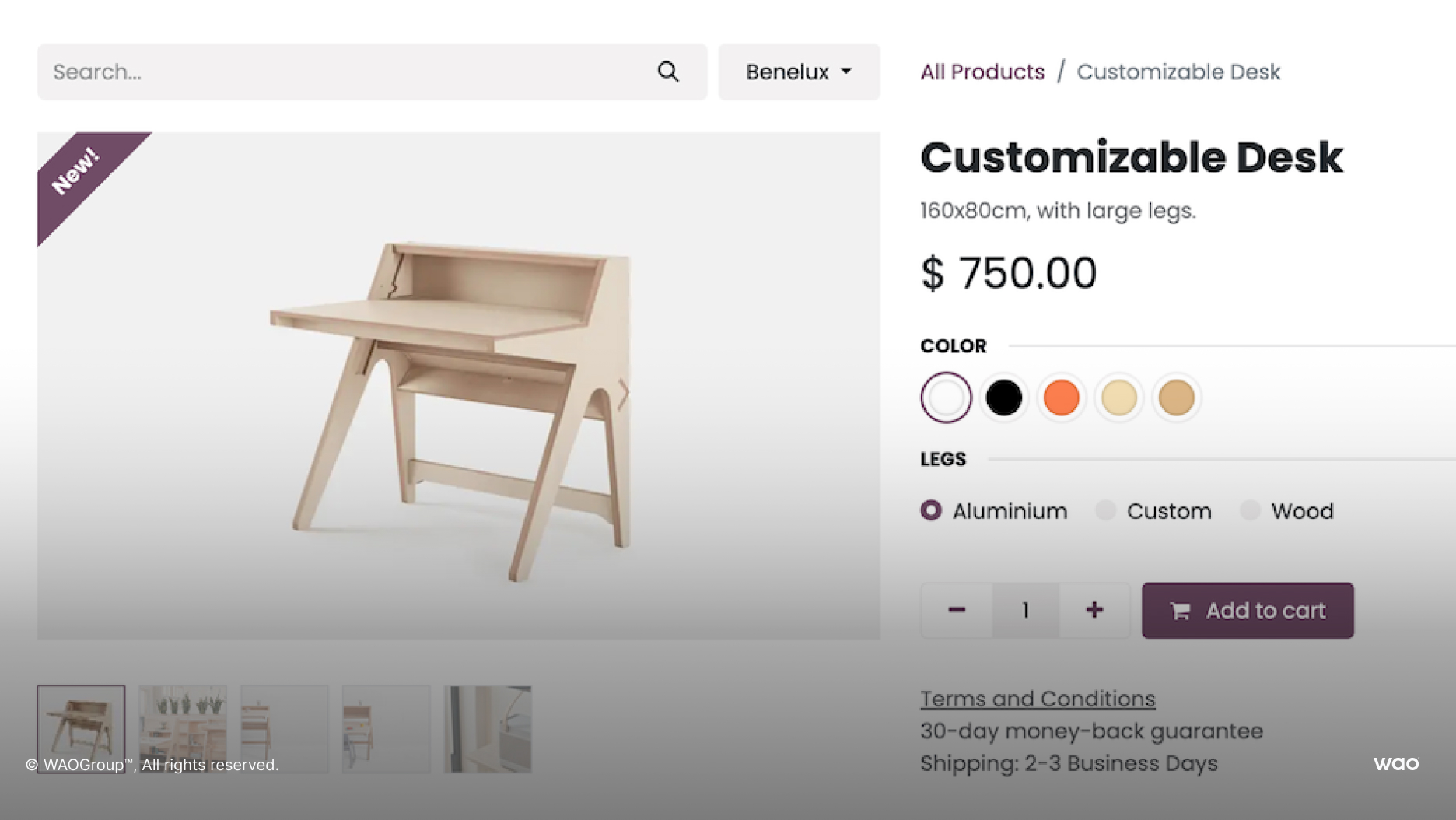
Core business functionality determines operational efficiency and reporting capabilities. Both Odoo and Shopify offer point of sale (POS) functionalities and integrated pay features, which are essential for retail businesses managing both online and offline transactions.
Odoo’s Comprehensive Business Suite
Odoo shines when businesses need integrated operational management, especially when paired with specialists who build Odoo eCommerce websites integrated into the wider ERP. The platform provides:
- Accounting and invoicing: Chart of accounts, tax localizations, multi-company consolidation, financial reporting.
- Inventory management: Multi-warehouse routing, barcode scanning, batch/lot tracking, reordering rules.
- CRM and sales: Customer tracking, pipeline management, quotation workflows. Odoo’s integrated approach enables businesses to engage with customers more effectively, improving customer satisfaction and supporting business growth by focusing on customer needs throughout the eCommerce process.
- Manufacturing: BOMs, work orders, quality control, shop-floor operations.
Odoo 17 provides essential SEO tools like meta tags, descriptions, and keyword optimization to enhance organic search visibility, making it suitable for multilingual SEO. These features are integrated into the platform without the need for additional plugins or paid subscriptions.
RTS Holdings in Australia, for example, centralised operations across ecommerce, inventory and manufacturing using multiple Odoo modules—eliminating duplicate systems and improving visibility.
Shopify’s E-Commerce-Specific Features
Shopify excels at front-end commerce capabilities:
- Built-in payment processing with Shopify Payments.
- Checkout optimization and abandoned cart recovery.
- Marketing automation and discount management.
- Analytics dashboards for online sales performance.
Inventory management covers variant-level stock and location tracking but lacks supply chain depth. Accounting typically requires external tools. Manufacturing, quality control and HR sit outside Shopify’s scope entirely.
For businesses where ecommerce is the primary operation with limited back-office complexity, this focus delivers efficiency. For operations requiring integrated business management, additional features must come from third-party integrations.
Support & Implementation
Support quality and implementation complexity affect time-to-value and ongoing success.
Odoo Implementation and Support
Implementing Odoo involves structured discovery, module selection and potentially custom development. The learning curve varies based on scope, so many organisations work with specialists who provide tailored Odoo implementations, upgrades and support.
- Enterprise users receive official Odoo SA support and managed upgrades.
- Partner networks (like WAO) provide implementation services for both editions, following structured methodologies such as the WAO Group’s end-to-end Odoo delivery approach.
- Community modules extend functionality with community support, and resources like the WAO Group Odoo insights blog help businesses navigate best practices and common pitfalls.
- Training requirements depend on operational complexity.
The ease of setup for Odoo is rated highly, with a score of 8.9/10, indicating that users find it relatively easy to implement compared to other solutions. Odoo is designed to be user-friendly, offering intuitive interfaces that make it suitable for users of varying technical backgrounds.
For larger deployments (50-100+ users with manufacturing or multi-warehouse), projects typically span 5 to 7 months Read more about Odoo as an integrated ERP accounting system., stretching to 9 to 12 months where several entities are involved. Long-term partnerships with implementation teams ensure ongoing optimization.
Shopify Setup & Support
Shopify enables rapid deployment:
- Stores can launch within hours for basic catalogues.
- 24/7 customer support with extensive documentation.
- Guided onboarding for standard configurations.
- Large partner ecosystem for design and development.
This user friendliness suits businesses seeking quick market entry. However, complex customization or deep integration requirements may exceed standard support capabilities, requiring specialized consultants.
Ongoing management involves maintaining app compatibility, updating integrations and managing multiple vendor relationships.
Odoo E-Commerce vs Shopify: Which Should You Choose?
Choose Odoo if you need integrated business management across accounting, inventory, CRM and potentially manufacturing, and want to leverage Odoo as a comprehensive, scalable ERP platform. The platform suits companies with complex operations, existing system integration requirements, and long-term scalability needs. Odoo’s all-in-one solution simplifies the user experience by integrating various business functions, reducing the need for multiple software solutions. Odoo also provides straightforward SEO tools at the page level, making it easier for non-technical users to optimize each page of their site compared to more complex CMS platforms.
Choose Shopify if you want rapid ecommerce deployment with minimal technical requirements. The platform works well when online retail is your primary focus, back-office operations are simple or already handled elsewhere, and storefront performance is the priority.
Consider your growth trajectory. Shopify scales by adding apps to its ecosystem, while Odoo scales by integrating additional business modules. Both approaches work—but they lead down different paths, particularly if you are new to Odoo and exploring how it can support long-term growth.
Evaluate total cost of ownership including implementation, ongoing management, and hidden expenses from plugins, apps and integrations. What appears cheaper initially may cost more as operations grow, and many businesses choose to discuss their specific requirements with an Odoo consultancy or book a consultation with WAO Group’s Odoo specialists to model scenarios.
Both platforms can support successful online businesses when matched with appropriate business requirements. The right path depends on operational complexity, integration needs and how much control you want over your entire business system.
Get Started
Ready to talk to an Odoo expert?
Our team of accounting and Odoo specialists are ready to help you find the right ERP solution for your business.
Book a free consultation →The information and tips shared on this blog are meant to be used as learning and personal development tools as you launch, run and grow your business. While a good place to start, these articles should not take the place of personalised advice from professionals. As our lawyers would say: “All content on WAO’s blog is intended for informational purposes only. It should not be considered legal or financial advice.” Additionally, WAO is the legal copyright holder of all materials on the blog, and others cannot re-use or publish it without our written consent.